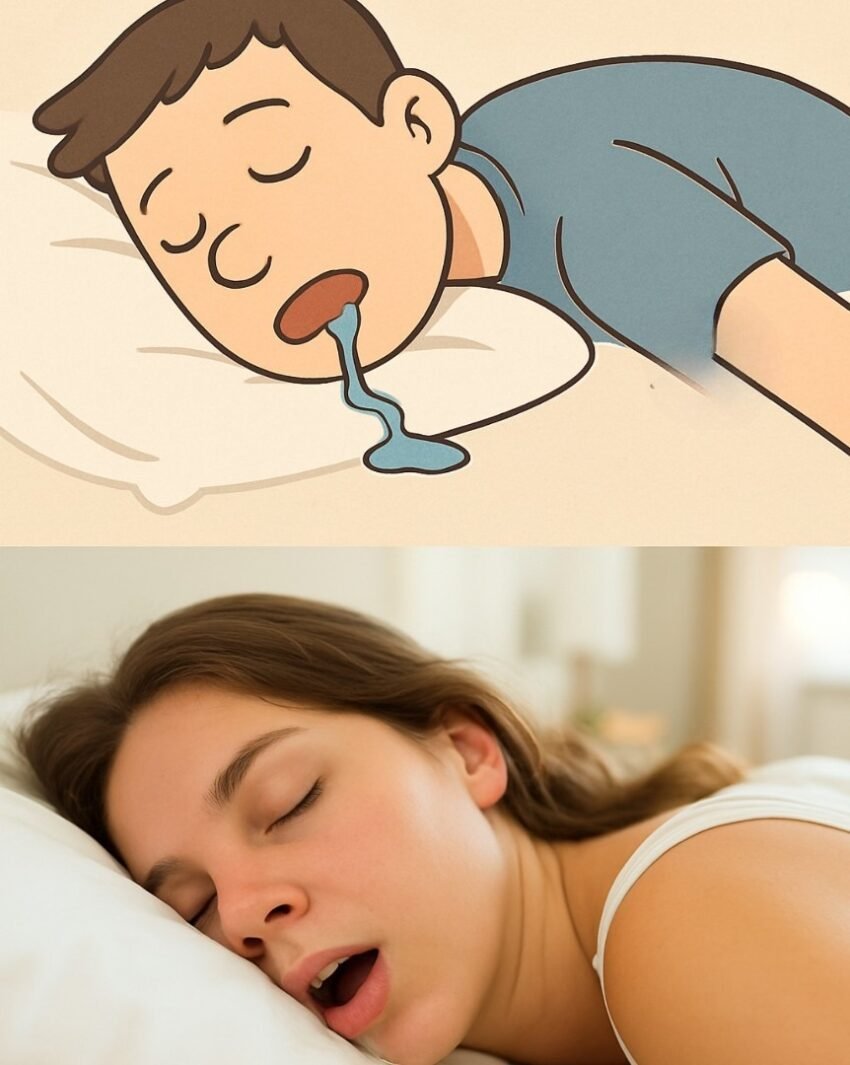
If you drool while you sleep, it’s generally a sign that your brain is in a deep stage of sleep and your body’s muscle relaxation is working normally. It’s rarely a sign of a brain problem and is more often related to sleep position, anatomy, or nasal congestion.
Here’s a detailed breakdown:
What Drooling During Sleep Actually Signifies
-
Deep, Restful Sleep: When you enter the deep stages of non-REM sleep, your brain sends signals to profoundly relax your skeletal muscles (a state called atonia). This includes the muscles in your face, jaw, and throat. When your jaw relaxes and falls open, saliva can pool and escape—hence, drooling. In this way, drooling can be a positive sign of deep relaxation.
-
Sleeping Position: The most common cause is sleeping on your side or stomach. Gravity pulls saliva down toward your pillow instead of back into your throat.
-
Anatomy & Physiology: Some people naturally produce more saliva. Issues like nasal congestion, allergies, or a sinus infection force you to breathe through your mouth, which dries it out and can paradoxically lead to more saliva production as a response, or simply lets it flow out more easily.
When It Might Be Connected to Neurological or Health Conditions (Less Common)
While usually benign, excessive new or sudden drooling, especially with other symptoms, can sometimes be a sign to discuss with a doctor.
-
Sleep Apnea: Severe, nightly drooling can be a sign of Obstructive Sleep Apnea (OSA). When the airway is blocked, the body tries to open it by dropping the jaw and protruding the tongue, leading to mouth breathing and drooling. Other signs include loud snoring, gasping for air, and daytime fatigue.
-
GERD (Acid Reflux): Stomach acid irritating the esophagus can trigger excess saliva production as a protective mechanism.
-
Neurological Conditions: In conditions like Parkinson’s disease, ALS, or after a stroke, there can be a loss of control over facial and swallowing muscles, leading to drooling. However, this is almost always present while awake as well.
-
Side Effect of Medications: Certain medications (like some antipsychotics or those for Alzheimer’s) can increase saliva production.
The “Brain Signal” Myth
The idea that drooling signals a “brain command” or specific neurological message is an oversimplification. The brain’s role is in orchestrating the overall state of sleep and muscle relaxation, not sending a discrete “drool now” signal. The drooling itself is a mechanical byproduct of that relaxed state combined with gravity and anatomy.
What to Do If You Drool
-
If it’s occasional and not bothersome: Enjoy it as a sign of deep sleep! Consider using a towel over your pillowcase.
-
To minimize it:
-
Try to train yourself to sleep on your back. This allows saliva to pool at the back of your throat and trigger a swallow reflex.
-
Treat nasal congestion with saline sprays, antihistamines, or a humidifier.
-
Stay hydrated during the day. Dehydration can lead to thicker saliva that’s more noticeable.
-
-
See a doctor if you notice:
-
A sudden, major increase in drooling.
-
Choking or gasping for air during sleep.
-
Daytime sleepiness or brain fog.
-
Facial weakness or difficulty swallowing while awake.
-
Conclusion: For the vast majority of people, drooling in sleep is a harmless, even positive, sign of deep muscle relaxation during quality sleep. It’s your brain doing its job of powering down your body. Only be concerned if it’s a new, excessive pattern accompanied by other symptoms like snoring, gasping, or daytime impairment. In those cases, a sleep study might be recommended to rule out sleep apnea