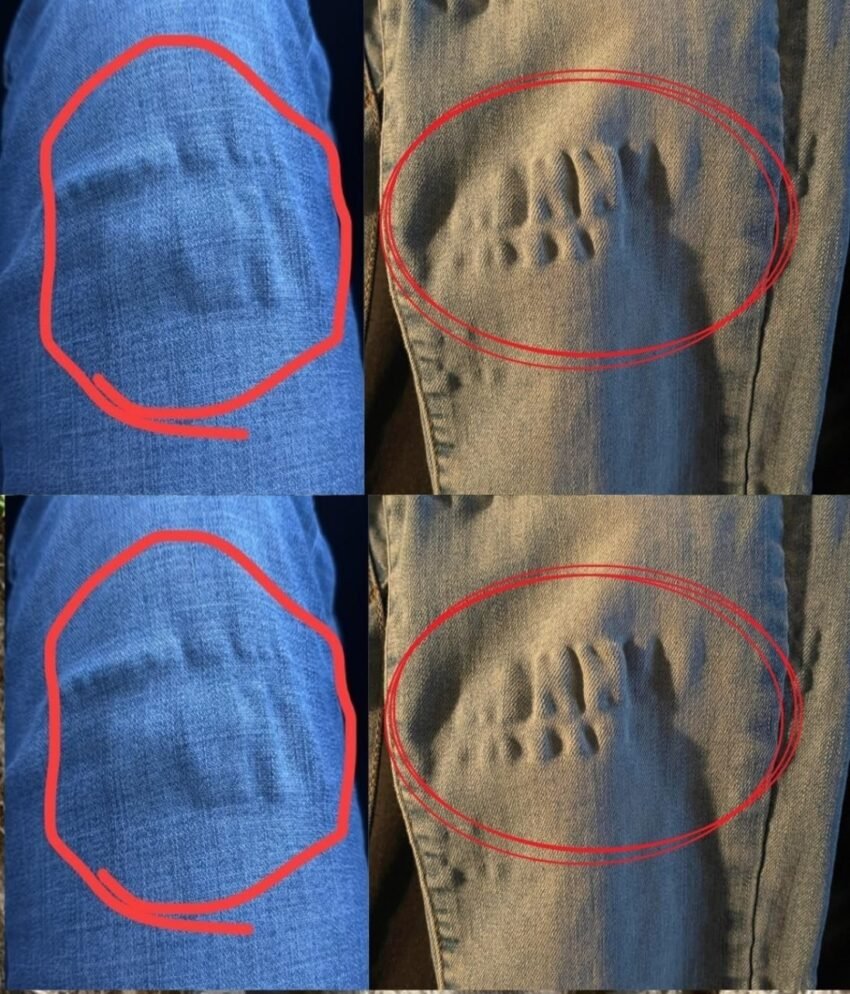
Those weird ripples, puckers, or creases—especially around the knees, thighs, or seams—are a common frustration. They’re not a defect, but a result of how modern jeans are made and how we care for them.
Here’s a breakdown of the main causes and what you can do about it.
Primary Causes: The “Shrink-to-Fit” Process & Fabric Blends
-
Differential Shrinkage (The #1 Culprit): This is the core of the issue.
-
Most jeans are made from a blend of cotton and synthetic fibers like polyester, elastane (spandex), or Lycra.
-
When washed and dried, cotton shrinks significantly when exposed to heat (both water and dryer heat).
-
Synthetic fibers do not shrink, or shrink very little.
-
The result? The cotton fibers in the fabric contract, but the polyester or elastane threads resist. They are locked in a tug-of-war, creating internal tension that manifests as permanent ripples, puckers, and a slightly “bubbly” texture. This is most pronounced in areas that stretch in wear (knees, thighs).
-
-
The Role of Stretch (Elastane/Spandex):
-
Stretch jeans are especially prone to this. When you wear them, the elastane stretches. In the wash, the cotton tries to shrink back to its original state, but the elastane “remembers” its stretched position. This conflict creates pronounced rippling.
-
-
Heat is the Accelerator:
-
Hot water and high-heat drying maximize cotton shrinkage. The more heat you use, the more severe the rippling effect will be.
-
-
Construction & Seam Shrinkage:
-
Sometimes, the thread used for stitching has a different fiber content or shrink rate than the denim itself. If the thread shrinks more, it can pucker the seams.
-
How to Prevent or Minimize the Weird Ripples
You can’t always eliminate it entirely with stretch blends, but you can dramatically reduce it.
-
Wash Less Frequently: The best defense. Spot clean when possible. Denim (especially raw or selvedge) doesn’t need washing after every wear. Air them out instead.
-
Wash Inside Out: This protects the outer surface from friction and agitation, which can exacerbate the puckering.
-
Use Cold Water Only: Cold water minimizes fiber shrinkage. Always select the cold/cool wash setting.
-
Air Dry Flat or Hang Dry – NEVER Use High Heat:
-
This is the most important step. Lay your jeans flat on a drying rack or hang them by the waistband.
-
Avoid using a clothes dryer, especially on high heat. If you must use a dryer, choose the “Air Fluff” (no heat) or “Delicate” setting for a very short time to remove dampness, then finish air-drying.
-
-
Smooth Them Out While Damp: After washing, gently stretch and smooth the jeans with your hands, paying attention to the knees and thighs, before laying them flat to dry. This helps set the fabric in a smoother state.
How to Fix Jeans That Are Already Rippled
If the damage is done, you can try to mitigate it:
-
Rewash and Air Dry Properly: Wash in cold water, then during the final spin cycle, add a cup of white vinegar to the rinse. This can help relax the fibers. Immediately lay them flat, smooth out the ripples by hand, and air dry.
-
Light Ironing (With Caution): Turn the jeans inside out. Use a steam iron on a medium-low setting. Place a thin press cloth (like a pillowcase) between the iron and the denim to avoid scorching the elastane. Gently iron and stretch the fabric smooth. Do not use high heat.
The Exception: High-Quality vs. Fast Fashion
-
Better Quality Jeans: Often use more consistent, longer-staple cotton and better construction techniques, which can reduce this effect. 100% Cotton Rigid Denim (non-stretch) will shrink uniformly and won’t get these synthetic-blend ripples, though it will get natural wear creases.
-
Fast-Fashion Jeans: Frequently use high-stretch, high-synthetic blends and are cut and sewn with maximum cost-efficiency, making them more susceptible to this puckering phenomenon.
In short: Those weird ripples are a sign of the internal battle between shrinking cotton and non-shrinking synthetics in your jeans, worsened by heat. To fight it, wash less, use only cold water, and always air dry.