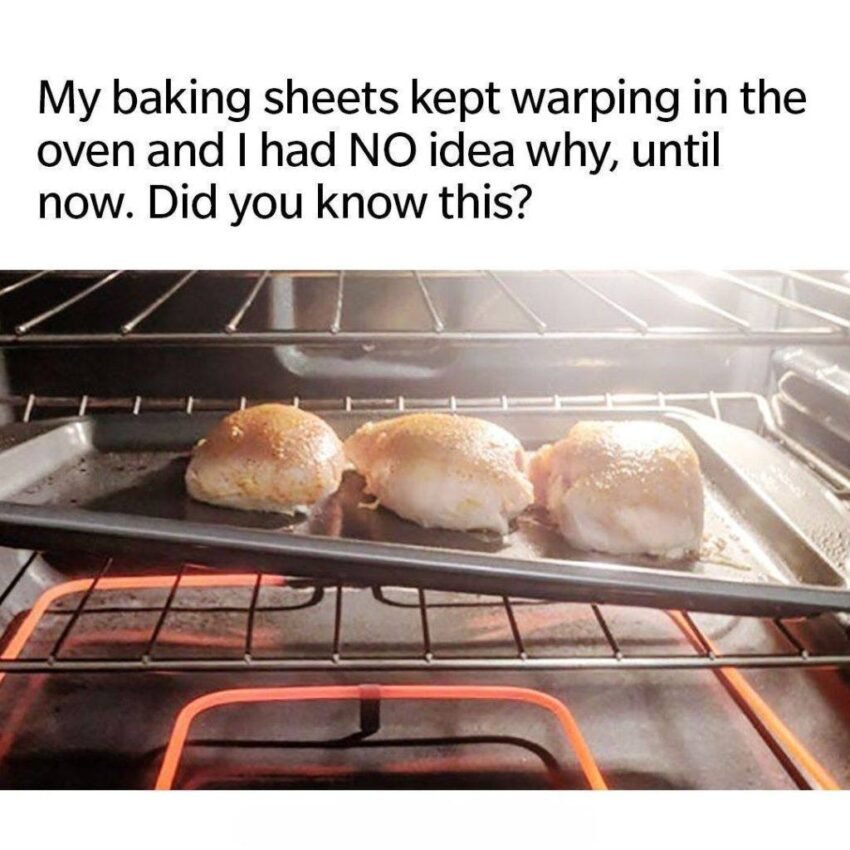
A warped pan is a common and frustrating issue, especially with modern, lightweight cookware. Here’s a breakdown of the causes, prevention, and the unfortunate truth about fixing it.
What Causes a Pan to Warp?
The primary cause is rapid, uneven temperature change, which creates stress in the metal. Here are the most common scenarios:
-
Thermal Shock: This is the #1 culprit.
-
Placing a hot pan under cold running water.
-
Adding a large amount of cold food or liquid to a screaming-hot, empty pan.
-
Placing a cold pan on a very high burner.
-
Taking a pan from the oven and placing it on a cold or wet countertop.
-
-
Incompatible Heat Source: Using a pan on a burner that’s too large or too small.
-
Burner too large: The flames or electric coil heat the edges and sides of the pan beyond where the flat bottom sits. This uneven expansion causes warping.
-
Burner too small: The center gets intensely hot while the outer rim stays cooler, creating a “hot spot” that can cause a dome or bulge in the center.
-
-
Poor Quality or Thin-Gauge Metal: Thinner pans (often inexpensive) have less structural integrity and warp much more easily than thick, heavy-bottomed pans. Multi-ply clad pans (like All-Clad) are more resistant but not immune to thermal shock.
-
Dry Heating: Heating an empty pan for too long, especially non-stick pans, can cause the metal to overheat and distort.
Can You Fix a Warped Pan? The Hard Truth
For the vast majority of warped pans, there is no safe or effective permanent fix. The metal has been permanently deformed.
-
Why “Fixes” Don’t Work: Hammering the pan back risks cracking or further weakening the metal. Bending it by hand or with tools is nearly impossible to do with the precision needed for perfect flatness.
-
The “Freezer Trick” Myth: Some suggest heating the pan and then shocking it in the freezer. Do not do this. This is just another thermal shock that will likely make the warping worse or cause the pan to fail completely.
-
Professional Repair? For a very expensive, high-end pan (like a copper pan), a skilled metalworker might be able to re-flatten it, but the cost likely outweighs replacing it for most cookware.
What to Do With a Warped Pan
-
If it’s a Non-Stick Frying Pan: Replace it. A warped non-stick pan will have uneven heating, causing food to cook poorly and the coating to degrade faster. It’s not worth saving.
-
If it’s a Stainless Steel or Carbon Steel Pan: You have a few workaround options if the warp is minor:
-
Use it on a different burner that matches the pan’s bottom size more closely.
-
Use it in the oven (where heat is ambient and even).
-
Use it for tasks where perfect contact isn’t critical (e.g., boiling pasta, steaming, making sauces, or oven roasting).
-
If it’s a high-quality pan with a slight warp, try it on a glass or induction cooktop—sometimes the electromagnetic field can pull a slightly warped bottom into contact. (Caution: A severe warp can scratch or damage a glass top).
-
How to Prevent Warping in the Future
This is the most important part. Treat your pans well:
-
Avoid Thermal Shock: Never run a hot pan under cold water. Let it cool on the stove or on a trivet.
-
Heat Gradually: Start on medium-low heat and increase slowly, especially with thicker pans.
-
Match Burner to Pan: The burner flame or coil should not extend beyond the pan’s flat bottom.
-
Add Oil/Fat Before Heating: For non-stick, always add a little oil or butter before turning on the heat.
-
Don’t Overheat Empty Pans: This is particularly crucial for non-stick coatings.
-
Invest in Quality: Thicker, heavier pans with multi-ply or disc-bottom construction are far more resistant to warping. Brands like All-Clad, Demeyere, and Made In are built to handle heat stress.
In short: You likely can’t fix it, but you can repurpose it. Your best move is to invest in a better pan and use these prevention tips to make it last a lifetime.