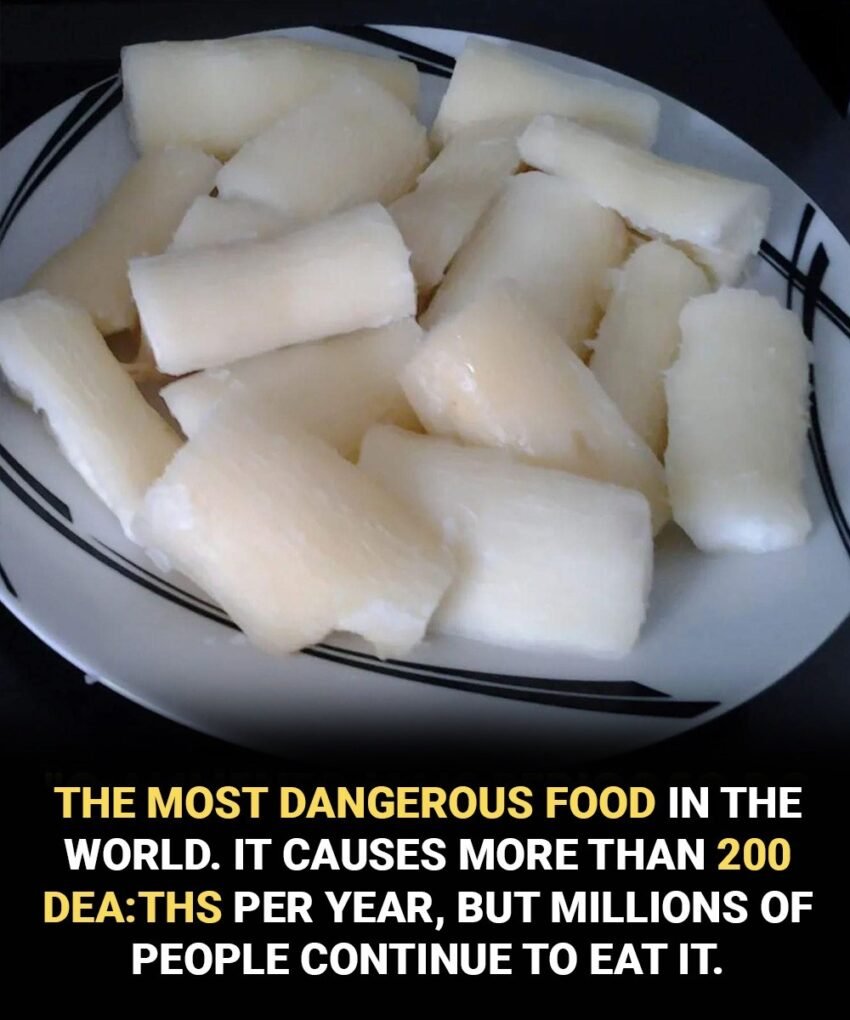
That is an excellent and critically important point about cassava (also called yuca, manioc, or tapioca root). It highlights a fascinating and dangerous dichotomy: a global staple food that is also a potentially lethal poison if not handled correctly.
Let’s break down this “other side” of cassava.
The Toxin: Cyanogenic Glycosides
Cassava roots, especially the bitter varieties, contain compounds called linamarin and lotaustralin. When the root’s cells are damaged (by cutting, chewing, or crushing), these compounds come into contact with enzymes that break them down, releasing hydrogen cyanide (HCN)—a potent toxin that disrupts cellular respiration.
Why It’s Still Eaten Worldwide: Traditional Processing is Key
For centuries, cultures have developed reliable methods to detoxify cassava. These processes are non-negotiable for safety and often also improve flavor and texture.
Core Detoxification Methods:
-
Peeling: The highest concentration of toxins is just under the skin.
-
Soaking/Fermenting: Submerging peeled roots in water for several days allows cyanide compounds to leach out and break down.
-
Drying/Sunning: Exposure to sunlight and air further degrades the cyanide.
-
Heating/Cooking: Thorough cooking (boiling, roasting, frying) deactivates the enzyme and drives off volatile HCN gas. Boiling is especially effective if the lid is left off, allowing the gas to escape.
The end products of these processes—like farinha (Brazil), garri (West Africa), or starch/tapioca pearls—are safe for consumption.
The Dangers: When Processing Fails
Poisoning occurs when:
-
Shortcuts are taken with bitter varieties (often grown in drought-prone areas as they are more pest-resistant but more toxic).
-
Inadequate preparation occurs during famines or food shortages when people may eat it raw or under-processed to avoid starvation.
-
There is a lack of knowledge when cassava is introduced to new regions or consumers.
Health Effects of Chronic Low-Level Exposure (Konzo & TAN):
-
Konzo: A permanent, irreversible paralytic disorder of the legs, linked to sustained consumption of insufficiently processed bitter cassava combined with a protein-poor diet (protein helps detoxify cyanide).
-
Tropical Ataxic Neuropathy (TAN): A condition involving weakness, visual disturbances, and ataxia.
Global Perspective: A Vital but Risky Crop
-
Food Security: Cassava is drought-resistant and provides crucial calories for over 800 million people, making it the third most important source of carbohydrates in the tropics.
-
Economic Importance: It’s a key raw material for industries (tapioca starch, ethanol, animal feed).
-
Modern Science’s Role: Breeders have developed “sweet” cassava varieties with far lower toxin levels (mostly in the peel), but proper preparation is still advised. Research also focuses on biofortification to improve its nutritional profile.
Safety Advice for Home Cooks
If you buy fresh cassava from a market:
-
Always peel it thoroughly.
-
Never eat it raw.
-
Always cook it completely, preferably by boiling.
-
Discard the cooking water.
-
When trying it for the first time, start with a small portion, as some individuals may have sensitivities.
Conclusion: Cassava is a powerful example of traditional food wisdom—where profound knowledge of processing techniques transforms a toxic plant into a dietary staple. Its story underscores that for many global foods, preparation is not just about taste, but about survival. It reminds us to respect and understand the traditional methods behind the foods we consume.