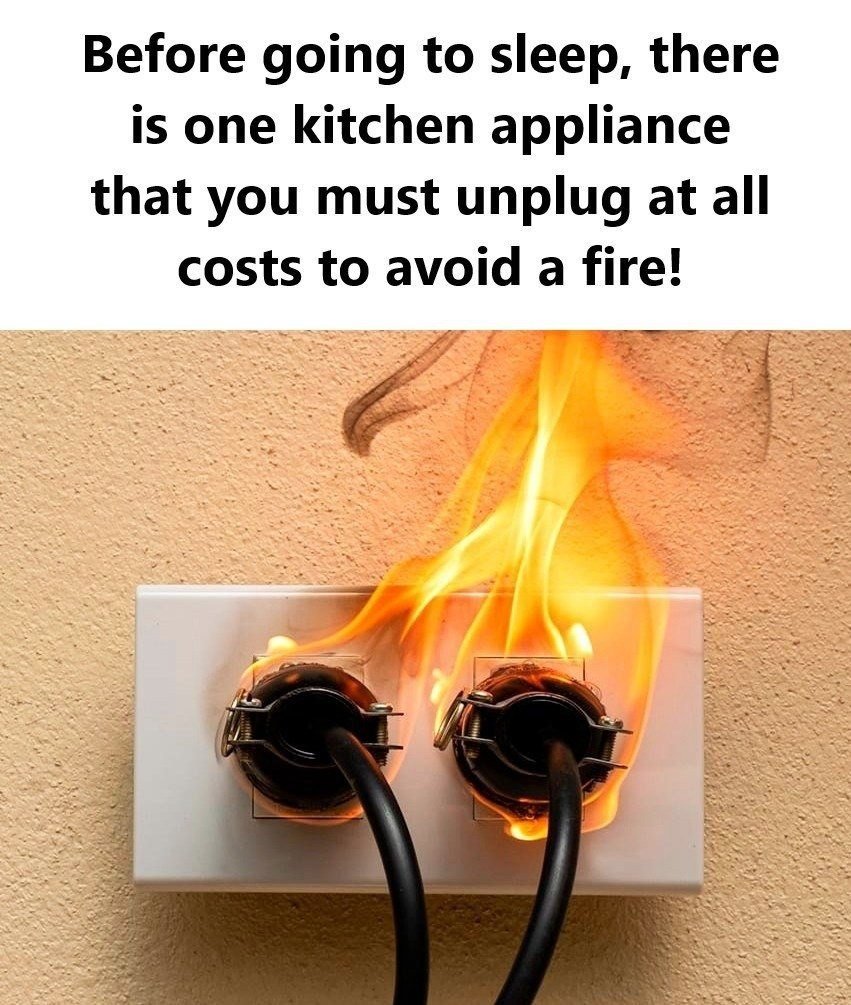
This is an important safety reminder. While the exact appliance may vary based on household and model, the general consensus among fire safety experts is:
The most critical kitchen appliance to unplug at night is your toaster or toaster oven.
Why the toaster?
-
High Heat + Flammable Residue: Crumbs and food debris accumulate at the bottom. If not cleaned regularly, they can ignite when the toaster is used—or even if it’s plugged in and a power surge occurs.
-
Mechanical/Thermostat Failures: Older or faulty toasters can overheat or get stuck in the “on” position, even when not actively toasting.
-
Short Circuit Risk: Like any electric appliance, wiring or heating elements can degrade over time and potentially cause a fire.
Other high-risk kitchen appliances to consider unplugging:
-
Electric kettle
-
Coffee maker
-
Air fryer / Countertop oven
-
Slow cooker (if not designed for long, unattended use)
-
Microwave (if older or shows signs of wear)
General Nighttime Appliance Safety Checklist:
✅ Unplug toasters, toaster ovens, and electric kettles when not in use.
✅ Ensure stovetop and oven knobs are off (gas or electric).
✅ Don’t leave dishwashers or washing machines running overnight unless you’re awake/hear them.
✅ Avoid charging phones, tablets, or laptops on flammable surfaces (beds, sofas).
✅ Keep appliances away from curtains, towels, and paper towels.
Proactive Fire Safety Habits:
-
Clean appliances regularly—remove crumbs from toasters, grease from air fryers/ovens.
-
Check cords for fraying or damage.
-
Install smoke alarms in the kitchen and bedrooms, and test them monthly.
-
Have a fire extinguisher rated for kitchen fires (Class K or multipurpose ABC) nearby.
While unplugging the toaster is a simple and highly recommended habit, the broader rule is: Unplug any countertop heating appliance when not in use, especially if it lacks an auto-shutoff feature or is older. If an appliance feels hot to the touch when idle, it’s a candidate for unplugging.
Final note: If you have small children or curious pets, unplugging also prevents accidental activation. Safety first—it only takes a few seconds to prevent a potential disaster.