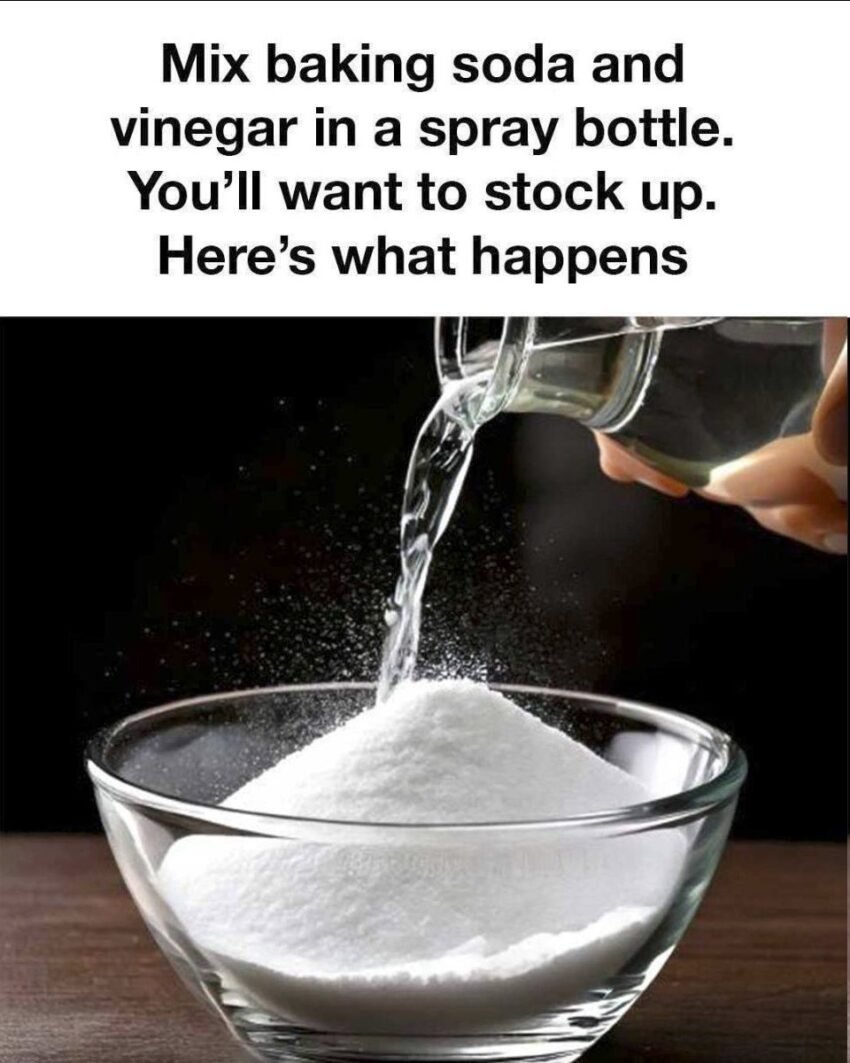
Their versatility stems from the chemical reaction between the two.
When baking soda (a base, sodium bicarbonate) and vinegar (an acid, acetic acid) mix, they fizz and produce three key things:
-
Carbon dioxide gas (the bubbles)
-
Water
-
Sodium acetate (a salt)
This reaction is what makes them so useful, and understanding its limits is key to using them effectively.
Why They’re a Powerful Duo for Cleaning:
-
Mechanical Action: The fizzing helps lift and loosen dirt, grime, and debris from surfaces (like in a clogged drain).
-
Abrasive yet Gentle: Baking soda alone is a mild abrasive, perfect for scrubbing without harsh scratching.
-
Deodorizing: Baking soda neutralizes odors on a chemical level, while vinegar’s strong smell dissipates, taking bad odors with it.
-
Degreasing & Dissolving: Vinegar is excellent at cutting through grease, mineral deposits (like limescale), and soap scum.
-
Non-toxic & Safe: They’re perfect for homes with kids, pets, or those wanting to avoid harsh chemicals.
Important Note: For maximum effectiveness, they are often used SEPARATELY, not mixed in advance.
Mixing them in a container just creates salty water. For cleaning, you typically apply one, then the other to let the reaction happen on the surface.
Top Household Uses:
1. Drain Cleaner
-
Pour ½ cup baking soda down the drain.
-
Follow with ½ cup vinegar.
-
Cover the drain and let it fizz for 15-30 minutes.
-
Flush with a pot of boiling water. The reaction helps break up minor clogs.
2. All-Purpose Scrub (Ovens, Countertops, Sinks)
-
Make a paste with baking soda and a little water.
-
Scrub onto the surface. For tough stains, spray or drizzle vinegar over the paste to activate the fizz and scrub again.
-
Wipe clean.
3. Deodorizer
-
Sprinkle baking soda on carpets, in shoes, or in the fridge. Let it sit, then vacuum.
-
Use vinegar in laundry (especially for towels) or in a spray to neutralize odors in trash cans.
4. Window & Glass Cleaner
-
Mix undiluted vinegar in a spray bottle (no baking soda here, as it can leave a residue).
-
Wipe with crumpled newspaper or a microfiber cloth for a streak-free shine.
5. Microwave Cleaner
-
Heat a bowl of equal parts water and vinegar for 3-5 minutes until it steams.
-
The condensation will loosen grime, which you can then easily wipe away.
Key Limitations:
-
Not for All Surfaces: Do NOT use on natural stone (granite, marble) or waxed wood, as the acid can etch or damage them.
-
Not a True Disinfectant: While vinegar has some antimicrobial properties, it is not a registered disinfectant against viruses like COVID-19 or flu. For sanitizing, use diluted bleach or alcohol solutions.
-
Unclogs Drawns Only Temporarily: For severe clogs, they may not be powerful enough to clear the entire pipe.
In short, they are a fantastic, eco-friendly, and inexpensive first line of defense for countless cleaning tasks, making them indispensable household staples.