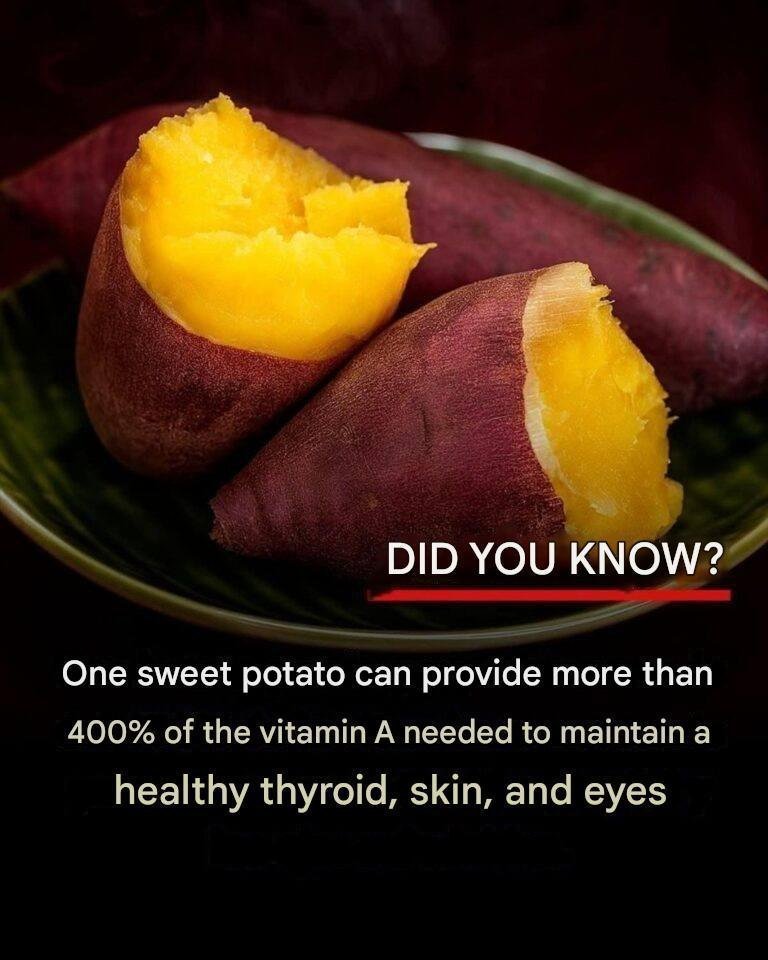
Sweet potatoes are a nutritional powerhouse, especially renowned for their incredible vitamin A content.
Let’s dive into the details of why they’re so exceptional, along with their other impressive benefits.
Sweet Potato: A Vitamin A Powerhouse
The Star Nutrient: Beta-Carotene (Pro-Vitamin A)
-
Content: One medium baked sweet potato (with skin) provides over 150% of the Daily Value for vitamin A. The vibrant orange color is a direct indicator of its high beta-carotene content.
-
How it works: Your body converts beta-carotene into retinol (active vitamin A), which is crucial for:
-
Vision: Essential for low-light and color vision. Prevents night blindness.
-
Immune Function: Maintains the health of skin and mucous membranes, your body’s first line of defense.
-
Cell Growth & Reproduction: Vital for healthy skin, organs, and tissues.
-
Maximizing Vitamin A Absorption:
-
Pair with Fat: Since vitamin A is fat-soluble, eating sweet potatoes with a healthy fat (e.g., olive oil, avocado, nuts) significantly increases absorption.
-
Cooking Helps: Lightly cooking (steaming, roasting) breaks down cell walls, making the beta-carotene more bioavailable than eating it raw.
Beyond Vitamin A: A Complete Nutritional Profile
Sweet potatoes are more than a one-nutrient wonder. They are:
-
Rich in Antioxidants: Packed with anthocyanins (in purple varieties) and other compounds that fight oxidative stress and inflammation.
-
Excellent Source of Fiber: Promotes gut health, aids digestion, and helps regulate blood sugar by slowing absorption.
-
High in Vitamin C: Supports immune function and collagen production.
-
Good Source of Potassium: Helps regulate blood pressure by balancing sodium effects.
-
Provides Manganese & B-Vitamins: Important for energy metabolism and brain function.
-
Relatively Low Glycemic Index (when cooked properly): Their fiber content causes a slower, healthier rise in blood sugar compared to white potatoes.
How to Incorporate Them Into Your Diet
-
Savory: Roasted as fries or cubes, mashed with garlic and herbs, added to soups, stews, and grain bowls.
-
Sweet: Baked whole, used in pies, muffins, pancakes, or smoothies.
-
Tip: Leave the skin on! It adds extra fiber and nutrients.
Comparison to Regular Potatoes
While both are healthy in their own right, sweet potatoes generally provide more:
-
Vitamin A: Exponentially higher (white potatoes have almost none).
-
Vitamin C: Slightly more.
-
Fiber: More per serving.
-
Antioxidants: Far greater diversity and quantity.
White potatoes, however, contain more potassium and are a good source of vitamin B6.
Conclusion: Calling sweet potatoes a “powerful source of vitamin A” is a significant understatement. They are a top-tier superfood, offering a rare combination of high-density nutrition, versatility, and natural sweetness that benefits overall health. Making them a regular part of your diet is a simple and delicious strategy for boosting your intake of this critical vitamin and many other essential nutrients.