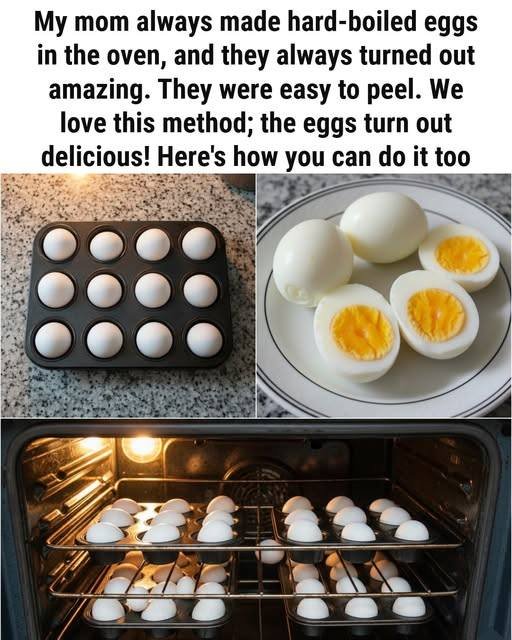
Reality! Oven-baked “hard-boiled” eggs are not only real but a surprisingly effective and hands-off method. However, there are important caveats and differences from the traditional stovetop approach.
Here’s a breakdown of what’s true, what’s not, and exactly how to do it.
The Reality: It Works, But They Aren’t “Boiled”
You are essentially steaming or baking the eggs in their shells in a dry oven. The result is a fully set white and yolk, but the process and texture have unique characteristics.
How to Bake Hard-Cooked Eggs in the Oven
Method 1: Muffin Tin Method (Most Common & Recommended)
-
Preheat your oven to 325°F (160°C).
-
Place one egg in each cup of a standard muffin tin. (No water, no oil needed).
-
Bake for 25-30 minutes. Time varies slightly by oven and desired yolk consistency (25 min for a slightly creamier yolk, 30 for fully firm).
-
Immediately transfer the baked eggs to a large bowl of ice water using tongs. Let them cool for at least 10-15 minutes. This stops the cooking and prevents the green/gray ring around the yolk.
-
Peel and use as you would traditionally boiled eggs.
Method 2: Directly on the Oven Rack
-
Place eggs directly on the center rack with a baking sheet on the rack below to catch any potential drips from a rare cracked egg. Bake as above. The muffin tin is generally preferred for stability.
Pros of the Oven Method
-
Excellent for Large Batches: You can cook dozens at once without needing a huge pot.
-
Hands-Off & Consistent: No watching the pot or timing a boil. Set a timer and forget it.
-
Easy Peeling: Many report even easier peeling, especially with fresh eggs, due to the gentle, even heat causing the membrane to pull away from the shell.
-
No Water Waste: Uses no water compared to boiling.
Cons & Important Caveats
-
Brown Spots: You may get small, harmless tan or brown spots on the outside of the egg white where it touched the hot pan. This is caramelization from the egg’s natural sugars and proteins. It doesn’t affect taste or safety.
-
Slight Texture Difference: The whites can be slightly more chewy or rubbery than stovetop eggs if slightly overbaked. The yolk tends to be creamier and more uniform.
-
The “POP” Risk: Very rarely, an egg might crack or pop in the oven. Using a muffin tin contains any mess.
-
Energy Inefficient: Heating a full oven for one dozen eggs is less efficient than a pot of water on the stove.
The Verdict: Myth or Reality?
It’s a reality with an asterisk.
-
MYTH BUSTED: The idea that you can’t cook eggs in the shell in the oven is false. It works reliably.
-
REALITY CHECK: They aren’t “boiled,” and the process has different pros, cons, and a slightly different final product than the traditional stovetop method.
When to Use This Method:
-
When you need to cook 2+ dozen eggs for deviled eggs, egg salad, or holidays.
-
When your stovetop is occupied.
-
When you want a truly hands-off approach.
When to Stick to Stovetop:
-
When cooking just a few eggs.
-
When you prioritize the classic, tender white texture.
-
When you want to save energy.
Final Word: Oven-baked hard-cooked eggs are a fantastic alternative kitchen hack, not necessarily a superior replacement. Try it once to see if you like the texture and convenience!