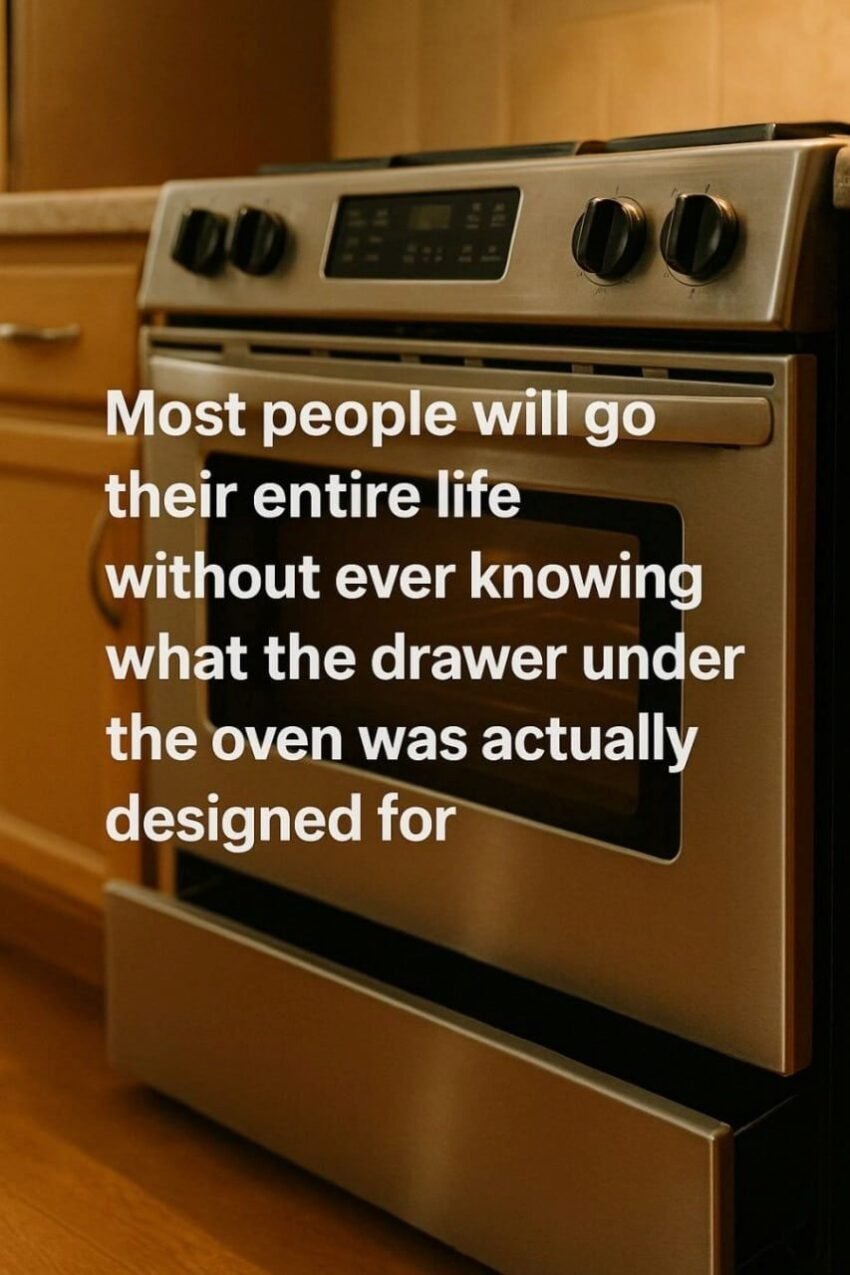
That drawer is the source of much household debate.
The drawer underneath most standard kitchen ovens is designed as a warming drawer, not for storage.
Here’s the breakdown of its intended purpose and common misconceptions:
The Official Purpose: A Warming Drawer
It’s meant to keep cooked food at a perfect serving temperature without continuing to cook it. This is ideal for:
-
Keeping dinner rolls, pancakes, or roasted meats warm while you finish the rest of the meal.
-
Holding side dishes so everything is hot when you sit down to eat.
-
Proofing bread dough in a gentle, consistent warmth.
How to Use It as a Warming Drawer:
-
Locate the controls: They are often a pull-out knob or a switch on the front of the drawer itself, or sometimes on the oven’s control panel.
-
Set the temperature: Many have “Low,” “Medium,” and “High” settings or a specific temperature range (usually 150°F–250°F / 65°C–120°C). “Low” is perfect for holding food.
-
Use appropriate cookware: Place food in oven-safe dishes or on a baking sheet before putting it in the drawer.
The Common Misconception: The “Broiler Pan & Baking Sheet” Storage
Most people use it for storing pots, pans, and cookie sheets. While convenient, this is not its designed function. However, if your oven is a lower-cost or compact model, the drawer may simply be a storage drawer without a heating element. You can usually tell by checking for a heating element or temperature controls.
How to Tell What You Have:
-
Check for a heating element: Pull the drawer all the way out and look up at the top inside. If you see what looks like a small, coiled oven heating element, it’s a warming drawer.
-
Look for a thermostat or controls: A knob, switch, or digital display on or near the drawer indicates a warming drawer.
-
Consult your oven’s manual: The model number (usually on a sticker inside the door or on the frame) will let you look up the exact specifications online.
Important Safety & Practical Notes:
-
If it’s a warming drawer, don’t store plastics or flammable items in it. You could melt or warp items, or even create a fire hazard.
-
Using it for storage can block ventilation for the oven’s bottom vent, potentially affecting baking performance.
-
It’s not a second oven. The temperatures are too low for actual cooking or baking.
-
It’s terrible for storing pots and pans if you have a gas oven, as they will get coated in dust and grease from the oven’s combustion gases.
In short: Before you shove another baking sheet in there, check if you’ve been overlooking one of your kitchen’s most useful tools for stress-free entertaining and meal timing.