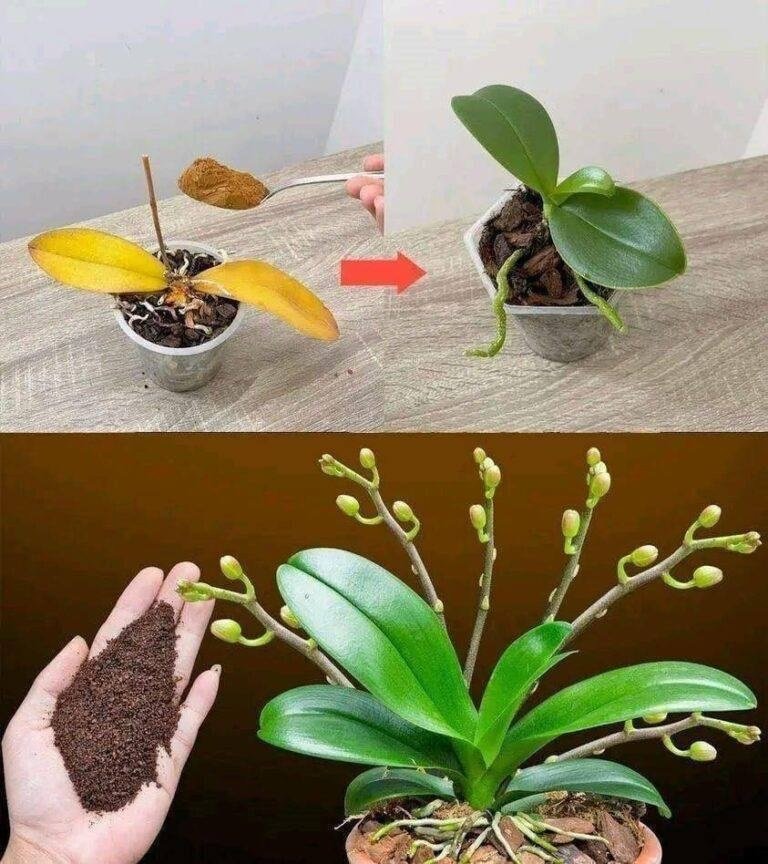
Understanding Plant Care Claims: Orchids and Flowering
I understand you’re referencing a common online claim about using “just a teaspoon” of something to make orchids bloom prolifically. Let’s separate helpful plant care from potential myths:
What Actually Helps Orchids Bloom:
-
Proper Light – Bright, indirect light is crucial (east-facing windows are ideal).
-
Correct Watering – Water when roots turn silvery (usually weekly), never let them sit in water.
-
Temperature Drop – Many orchids need a 10-15°F (5-8°C) nighttime temperature drop for 2-4 weeks to initiate blooming.
-
Balanced Fertilizer – Use a weak, balanced fertilizer (20-20-20) at ¼ strength every 2-4 weeks during growth periods.
-
Proper Potting Media – Well-draining orchid mix (bark, sphagnum moss).
Common “Miracle” Substances & Their Real Effects:
| Substance | Actual Effect | Precautions |
|---|---|---|
| Cinnamon | Antifungal for cuts; won’t induce blooming | Don’t apply to healthy roots/leaves |
| Aspirin | Unproven for blooming; may stress plant | Can alter soil pH |
| Sugar/Honey | Can feed harmful microbes, cause rot | Not recommended |
| Banana Peels | Minimal potassium; may attract pests | Better to compost first |
| Rice Water | Some nutrients but may promote mold | Use sparingly if at all |
A Safe, Balanced Orchid “Tonic” (Monthly):
-
1 liter warm water
-
¼ teaspoon balanced orchid fertilizer
-
½ teaspoon unsulfured molasses OR 1 teaspoon fish emulsion (for micronutrients)
-
Mix well, use during regular watering
Signs Your Orchid is Ready to Bloom:
-
New leaf growth has matured
-
Healthy, silvery-green roots
-
Appearance of a flower spike (long stem from leaf base)
Red Flags in “Miracle Bloom” Claims:
-
Promises instant results (orchids bloom on their own schedule)
-
Secret “one ingredient” solutions
-
Recommendations to use household products without dilution
-
Claims that replace proper light/temperature care
The real “miracle” is consistent, attentive care. Orchids typically bloom once yearly, with flowers lasting weeks to months when healthy.
Would you like specific advice for your orchid’s type (Phalaenopsis, Dendrobium, Cattleya, etc.) or help troubleshooting its care?