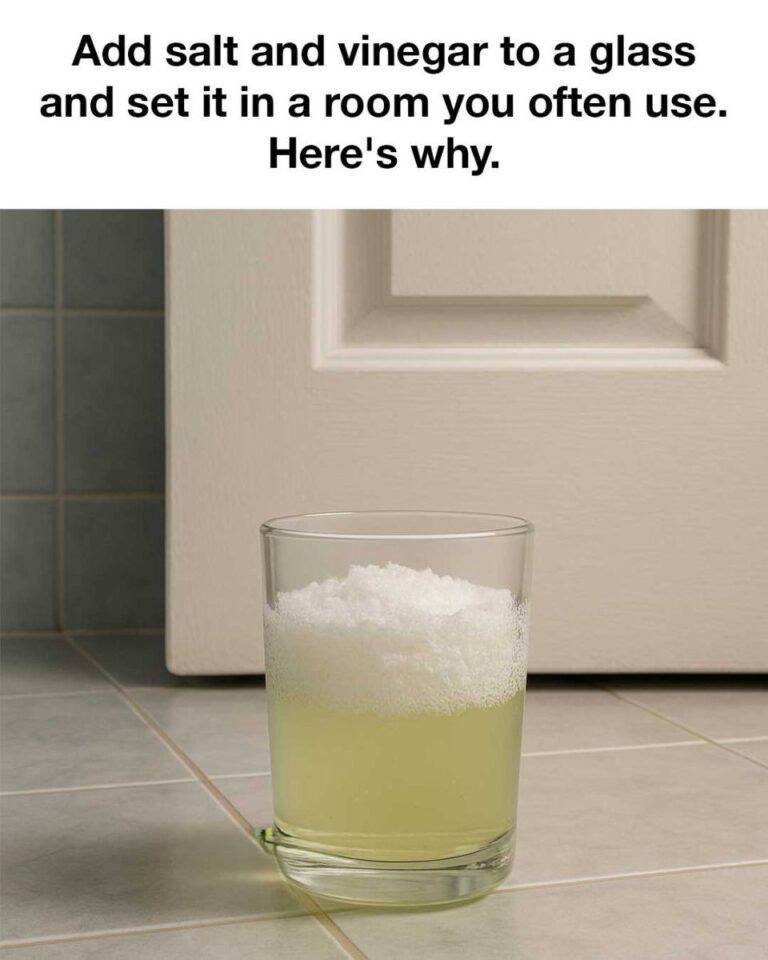
DIY odor-neutralizing and air-freshening hack. The claim is that a glass of salt and vinegar can absorb unpleasant smells and even help deter flies or fruit flies in a room you often use, like a kitchen, bathroom, or bedroom.
Here’s what it’s supposed to do, how to do it correctly, and what science says about its effectiveness.
What’s the Purpose?
-
Odor Absorption: Both salt and vinegar (especially white vinegar) are known for absorbing and neutralizing odors rather than just masking them.
-
Insect Deterrent: The acidic smell of vinegar is thought to repel some insects, like fruit flies (though apple cider vinegar is actually used to attract and trap them).
-
Humidity Reduction (Mild): Salt can absorb some moisture from the air, which may help in damp, musty-smelling rooms.
How to Set It Up
Ingredients:
-
1 glass or bowl
-
2–3 tablespoons of white vinegar or apple cider vinegar
-
1–2 tablespoons of table salt or coarse sea salt
-
Optional: A few drops of essential oil (e.g., lemon, lavender, eucalyptus) if you want a pleasanter scent.
Instructions:
-
Pour the vinegar into the glass.
-
Stir in the salt until partially dissolved.
-
Place the glass in a corner of the target room (e.g., kitchen countertop, bathroom shelf, near a pet area, or a musty closet).
-
Leave it for several hours or overnight. Replace every 2–3 days for continuous effect.
Does It Actually Work?
-
For Mild Odors: Yes, to some extent. Vinegar is a proven mild deodorizer (it’s why people boil it to remove cooking smells). Salt also has absorbent properties.
-
For Strong/Persistent Odors: Limited. It won’t replace deep cleaning, ventilation, or addressing the source (e.g., mold, spoiled food, pet accidents).
-
For Insects: White vinegar’s smell may deter some pests, but it’s not a reliable insect repellent. For fruit flies, a trap with apple cider vinegar and dish soap works better.
Popular Uses for This Hack
-
Kitchens: To absorb cooking smells (fish, fried food, onions).
-
Bathrooms: As a natural deodorizer.
-
New Rooms or Closets: To reduce mustiness or “new paint” smells.
-
Near Litter Boxes or Pet Beds: For odor control.
Important Precautions
-
Keep out of reach of children and pets to avoid spills or ingestion.
-
Don’t mix vinegar with bleach (creates toxic chlorine gas).
-
Vinegar has its own pungent smell that some find unpleasant—it should dissipate as it works, but adding a drop of essential oil can help.
More Effective Alternatives for Air Quality
-
Baking Soda: Better for absorbing odors (e.g., an open box in the fridge).
-
Activated Charcoal: Excellent for trapping odors and moisture.
-
Air Purifiers: For allergens, dust, and persistent odors.
-
Proper Ventilation: Simply opening windows is often the best solution.
Bottom line: The salt and vinegar trick is a harmless, low-cost experiment for mild, temporary odors. It’s not a miracle solution, but it can be a useful part of your natural cleaning toolkit. If a bad smell persists, investigate for mold, mildew, or other hidden sources.