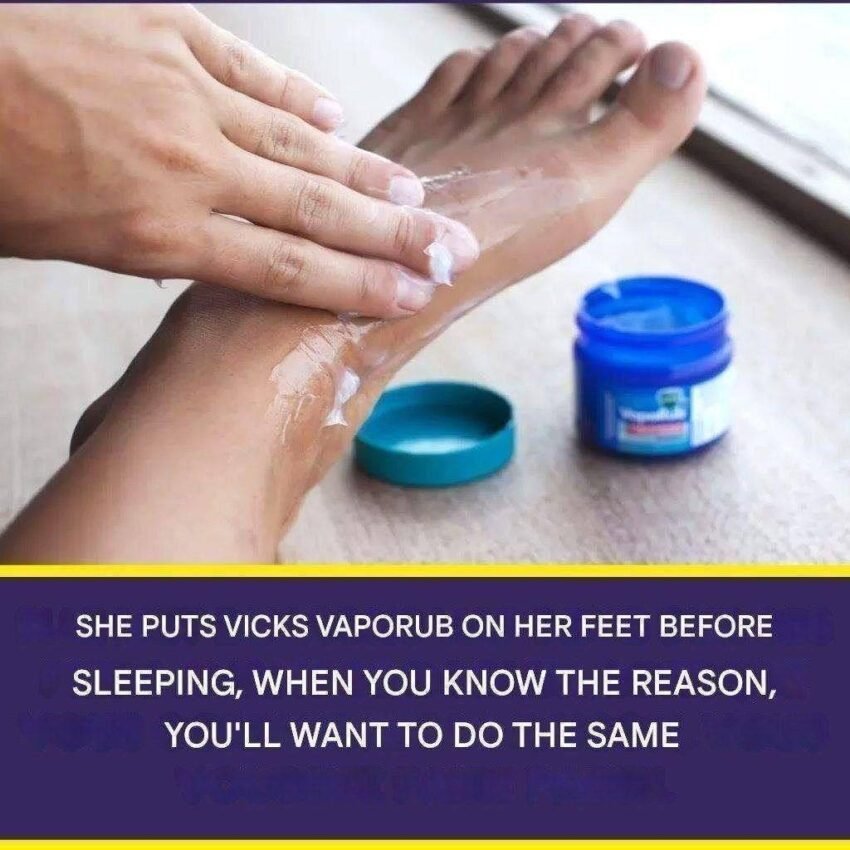
The practice of applying Vicks VapoRub on the soles of the feet before bed is a popular home remedy, though it’s important to note that most of these claimed benefits are based on anecdotal evidence rather than strong scientific research. Vicks is FDA-approved for topical use on the chest and throat for cough and congestion relief, but not specifically for use on feet.
That said, many people report positive experiences. Here are 4 commonly cited benefits and what to know about them:
1. May Help Relieve Cough & Cold Symptoms
-
Claim: Applying Vicks to the feet (often covered with socks) is believed by some to reduce nighttime coughing and congestion.
-
How it might work (anecdotally): Menthol’s strong aroma might have a placebo or sensory effect. Some theories suggest nerve pathways or reflexology points on the feet connect to respiratory pathways.
-
Science says: No strong clinical evidence supports this. The cough-suppressant effect of topical menthol/camphor is generally linked to inhalation of vapors from the chest/throat area.
2. Can Soothe Muscle Aches & Sore Feet
-
Claim: Camphor and menthol in Vicks produce a cooling sensation and have mild analgesic (pain-relieving) properties that may ease foot soreness or muscle fatigue.
-
How it might work: These ingredients can act as counter-irritants, distracting nerves from deeper aches.
-
Science says: Topical analgesics are commonly used for muscle pain—applying them to the feet could provide temporary relief.
3. May Help Soften Dry Skin & Heel Cracks
-
Claim: The petroleum jelly base in Vicks acts as an occlusive moisturizer, helping to soften rough skin, especially on heels.
-
How it might work: Occlusives lock in moisture. Wearing socks overnight enhances this effect.
-
Science says: Petroleum jelly is a well-established moisturizing agent. However, Vicks also contains camphor and eucalyptus oil, which might irritate broken skin.
4. Anecdotal Use for Toenail Fungus
-
Claim: Some apply Vicks daily to toenails affected by fungal infection (onychomycosis), believing the thymol and other essential oils have antifungal properties.
-
How it might work: Thymol has known antifungal properties, but concentration in Vicks is low.
-
Science says: Limited and low-quality evidence. Prescription or OTC antifungal treatments are more reliable. Consult a doctor for proper diagnosis.
⚠️ Important Safety Notes & Cautions
-
Not for open wounds or deep cracks: Camphor can be toxic if absorbed into broken skin.
-
Allergy risk: Eucalyptus, menthol, or camphor may cause skin irritation or allergic reactions in some.
-
Avoid in certain groups: Do not use on children under 2, pregnant/nursing women, or people with certain health conditions (e.g., asthma, seizures) without consulting a doctor.
-
Never ingest or apply inside nostrils — serious respiratory distress can occur.
How People Typically Apply It
-
Wash and dry feet thoroughly.
-
Rub a thin layer of Vicks on the soles (and heels if desired).
-
Put on clean socks to avoid staining sheets and enhance absorption.
-
Wash off in the morning.
Bottom Line
While some find Vicks on feet helpful for cough relief, moisturizing, or temporary pain relief, scientific backing is minimal. It’s generally safe for most adults if used on intact skin, but it’s not a substitute for medical treatment for infections, chronic cough, or severe pain.
If symptoms persist, always consult a healthcare provider for evidence-based care.