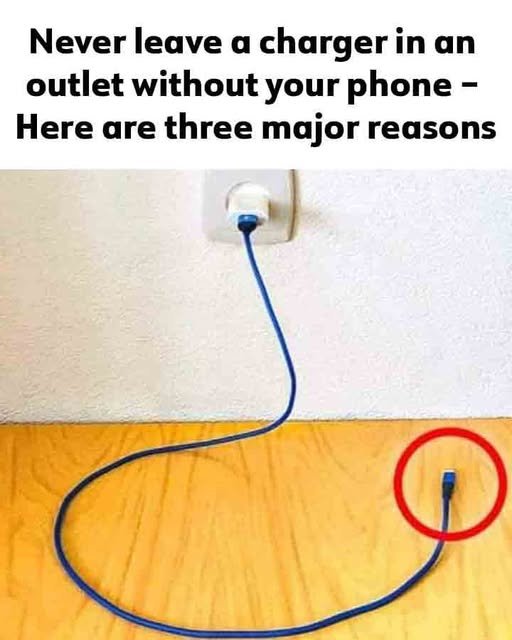
While it’s a common piece of advice, the reality is more nuanced. Leaving a charger (the power adapter/plug) in an outlet without a phone connected is generally low-risk with modern, certified chargers, but there are valid reasons for caution, especially with older, damaged, or poor-quality units.
Here are the top 6 reasons why it’s often recommended to unplug chargers when not in use:
1. “Vampire” Energy Draw (Standby Power)
Even when not charging a device, most modern chargers continue to draw a small amount of electricity as long as they’re plugged in. This is called phantom load or standby power. While the amount per charger is minimal (usually 0.1 to 0.5 watts), the cumulative effect of multiple chargers in a household adds to your electricity bill and environmental footprint over time.
2. Risk of Electrical Faults or Short Circuits
Although rare, any electrical device is susceptible to internal component failure. A faulty transformer or capacitor inside the charger can overheat, short-circuit, or even catch fire, regardless of whether a phone is attached. This risk is higher with:
-
Cheap, uncertified chargers (no safety marks like UL, CE, etc.)
-
Damaged chargers (frayed cables, cracked housing)
-
Very old or overheated chargers
3. Potential Overheating in Poor Conditions
If a charger is left in an outlet in a hot environment (e.g., in direct sunlight, behind furniture, or under a blanket), heat can build up. Poor ventilation increases the risk of the charger overheating, which can degrade its internal components over time and, in extreme cases, pose a fire hazard.
4. Power Surge Vulnerability
During an electrical storm or a sudden power surge in the grid, any plugged-in device is at risk. A charger left in the outlet can be damaged by a surge. In worst-case scenarios, a severe surge can cause it to overheat or spark, potentially damaging the outlet or starting a fire. A surge protector can mitigate this.
5. Safety for Children and Pets
A loose, dangling charger with an exposed USB port can be a curiosity hazard for small children or pets. They could touch the prongs, insert metal objects into the USB port (causing a short circuit), or trip on the cable if it’s still attached. Unplugging removes this physical risk entirely.
6. Long-Term Wear on the Charger and Outlet
-
Charger Wear: Continuous exposure to minor electrical currents and heat cycles can, over years, degrade the charger’s internal components, reducing its efficiency and lifespan.
-
Outlet Wear: Frequently plugging and unplugging can also cause mechanical wear on the outlet’s contacts. However, leaving it plugged in indefinitely can sometimes cause the plug to sit slightly loose over time, which is also not ideal.
Bottom Line: Should You Always Unplug?
-
For a high-quality, undamaged charger in a cool, dry, and stable environment, the actual danger is very low. The primary reasons are energy conservation and eliminating any avoidable risk.
-
You should DEFINITELY unplug if the charger is:
-
Cheap/no-name brand.
-
Physically damaged, hot to the touch, or making noise.
-
In a hot, humid, or poorly ventilated area.
-
In a home with frequent power fluctuations.
-
Best Practice: If you want to be perfectly safe and efficient, unplug chargers when not in use, or plug them into a power strip with a switch that you turn off. For convenience (e.g., a bedside charger you use daily), ensure it’s a reputable brand and inspect it periodically for damage or excessive heat.