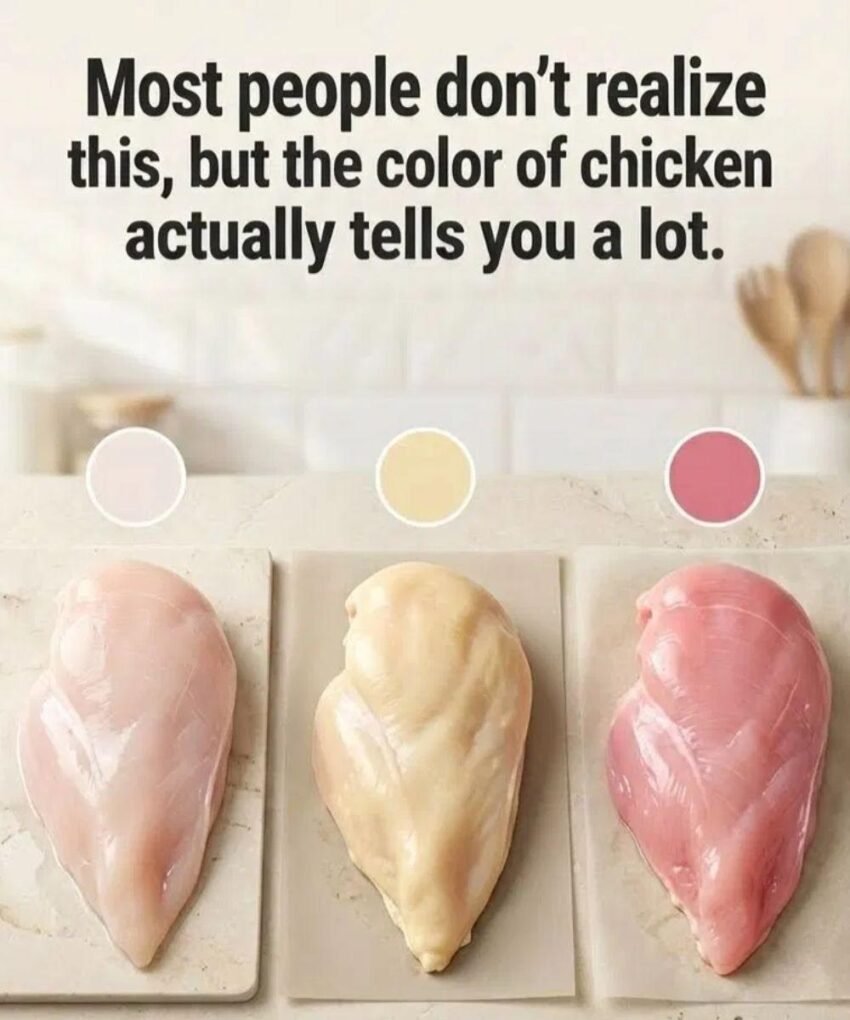
The connection between chicken meat color and its quality is indeed surrounded by persistent myths, and clarifying it involves understanding poultry science, processing, and even animal diet.
Here’s a breakdown of what determines chicken color and what it actually indicates about quality.
What Determines Chicken Meat Color?
-
Myoglobin Content: This is the primary factor. Myoglobin is a protein in muscle tissue that stores oxygen. Muscles used more frequently contain more myoglobin, which gives the meat a darker color.
-
Dark Meat (Thighs, Drumsticks): Comes from muscles used for standing and walking (legs). Higher myoglobin = darker, reddish-brown color.
-
White Meat (Breast, Wings): Comes from less-used muscles (breast). Lower myoglobin = lighter, pale pink color.
-
-
Diet & Environment: What the chicken eats can subtly influence color.
-
Chickens fed a diet high in corn or marigold petals (which contain carotenoids like lutein) may have slightly more yellow skin and fat. This affects skin color, not meat color, and is purely visual.
-
Free-range or pasture-raised chickens may develop slightly darker meat due to more exercise, but this is not a strict rule.
-
-
Age & Breed:
-
Older chickens (like stewing hens) have darker meat overall because their muscles have developed more myoglobin over time.
-
Certain heritage breeds may naturally have darker or more intensely colored meat.
-
-
Processing & Storage:
-
Exposure to oxygen can brighten the red hue of myoglobin (it turns into oxymyoglobin). That’s why vacuum-sealed meat looks purplish but turns bright pink when opened.
-
Freezer burn or prolonged storage can cause meat to turn pale, grayish, or dry—a true quality issue related to freshness, not the natural color.
-
Common Misconceptions vs. Facts
❌ Myth: “Yellow chicken skin means the chicken is organic, free-range, or higher quality.”
✅ Fact: Skin color is almost entirely diet-based. A corn-based diet = yellower skin. It does not reliably indicate farming method, taste, or nutritional value.
❌ Myth: “Pink or dark meat means the chicken is spoiled or unhealthy.”
✅ Fact: Variations in pinkness are normal due to myoglobin, oxygenation, and freezing. Spoilage is indicated by a slimy texture, foul odor, or sticky surface—not color alone.
❌ Myth: “White meat is always superior to dark meat.”
✅ Fact: This is a preference, not a quality judgment. Dark meat has more fat and connective tissue, making it juicier and more flavorful for certain dishes. White meat is leaner and protein-dense.
What Actually Indicates Quality in Chicken?
-
Freshness: Look for meat that is moist (not slimy), with a clean, mild smell.
-
Firmness: The meat should spring back when pressed gently.
-
No Excess Liquid: Packages shouldn’t have large amounts of liquid (this can indicate improper processing or water injection).
-
Labeling & Farming Practices: Terms like air-chilled, no antibiotics ever, pasture-raised, or certified organic often indicate better welfare and processing standards, which can influence texture and flavor more than color.
-
Purpose: Quality also depends on use. A stewing hen (darker, tougher meat) is ideal for broths, while a young broiler (tender white meat) is better for grilling.
Takeaway
While color can tell us something about the muscle type, diet, or processing of chicken, it is not a reliable standalone indicator of safety, taste, nutrition, or ethical farming practices. The real markers of quality are found in freshness, handling, labeling, and sourcing—not in the shade of pink or yellow we see in the package.
It’s a great example of how food science helps debunk marketing myths and guides us toward more informed choices.