Doctors and food safety experts emphasize that proper handling and cooking virtually eliminate the risk.
Here are the 4 types of foods most often cited for parasitic risk, along with science-based safety guidance—not fear-based warnings.
1. Raw or Undercooked Pork
-
Parasite of Concern: Trichinella spiralis (causes trichinosis).
-
Fact Check: Modern commercial pork farming in many countries (like the U.S. and EU) has drastically reduced trichinosis. However, wild game (bear, wild boar) and pork from non-regulated sources remain high-risk.
-
Doctor’s Advice: Cook pork to an internal temperature of 145°F (63°C) followed by a 3-minute rest. This kills all parasites and bacteria. Freezing at -15°C (5°F) for 20+ days also kills Trichinella (but cooking is the surest method).
2. Raw Freshwater Fish & Certain Saltwater Fish
-
Parasites of Concern: Tapeworms (e.g., Diphyllobothrium), roundworms (Anisakis).
-
Fact Check: Sushi-grade saltwater fish is typically frozen at -20°C (-4°F) for 7+ days (FDA guideline) to kill parasites. The highest risk comes from self-caught freshwater fish (like perch, pike) eaten raw or undercooked.
-
Doctor’s Advice: Freeze fish properly if eating raw (sashimi, ceviche, some sushi) or cook to 145°F (63°C). Purchase sushi from reputable sources that follow freezing protocols.
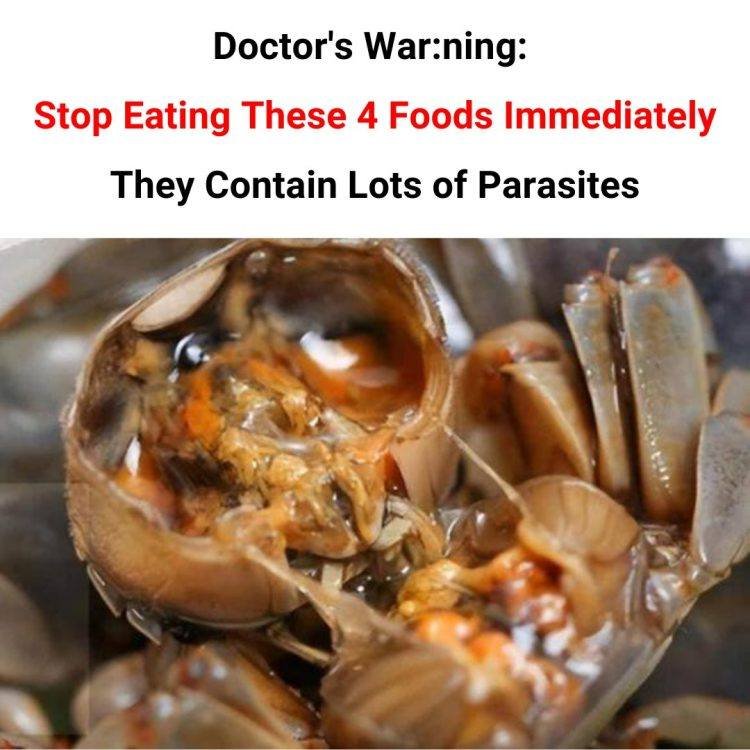
3. Undercooked Crab, Crayfish, & Other Crustaceans
-
Parasite of Concern: Paragonimus (lung fluke).
-
Fact Check: Common in regions where raw or pickled crustaceans are traditional (e.g., in some Asian cuisines). Not a risk from fully cooked crab or shrimp.
-
Doctor’s Advice: Cook thoroughly until the flesh is opaque and pearly. Avoid consuming raw or fermented crustacean dishes unless sourced from controlled, safe suppliers.
4. Unwashed Raw Vegetables & Contaminated Water
-
Parasites of Concern: Giardia, Cryptosporidium, and Ascaris (roundworm).
-
Fact Check: Parasites from contaminated soil or water can reside on leafy greens, herbs, and vegetables. This is a global risk, especially in areas with poor sanitation or where manure fertilizer is used.
-
Doctor’s Advice: Wash all raw produce thoroughly under running water. Use a vegetable brush for thick-skinned items. Drink treated or boiled water in areas of uncertain sanitation. Peeling or cooking eliminates risk.
The #1 Rule Doctors Actually Emphasize
Proper food preparation and cooking are far more important than simply avoiding foods. The headline’s “limit immediately” advice is overly simplistic. A more accurate warning would be:
“Always handle and cook high-risk foods properly to destroy parasites.”
General Food Safety Rules to Prevent Parasitic Infection
-
Cook Thoroughly: Use a food thermometer. Heat kills parasites.
-
Freeze Properly: For raw fish destined to be eaten raw, ensure it has been commercially frozen to parasite-killing temperatures.
-
Wash Hands & Surfaces: Prevent cross-contamination.
-
Wash Produce: Even if you plan to peel it.
-
Drink Safe Water: Especially when traveling.
-
Be Cautious with Wild Game: Cook to recommended temperatures.
Who Should Be Most Cautious?
-
Pregnant women
-
Young children
-
Elderly individuals
-
Those with compromised immune systems (e.g., cancer patients, HIV/AIDS)
Bottom Line: Don’t panic over sensational headlines. You don’t need to eliminate these foods—just prepare them safely. If you have specific health concerns, consult a doctor or a registered dietitian for personalized advice.
Sources: CDC, FDA, WHO food safety guidelines.