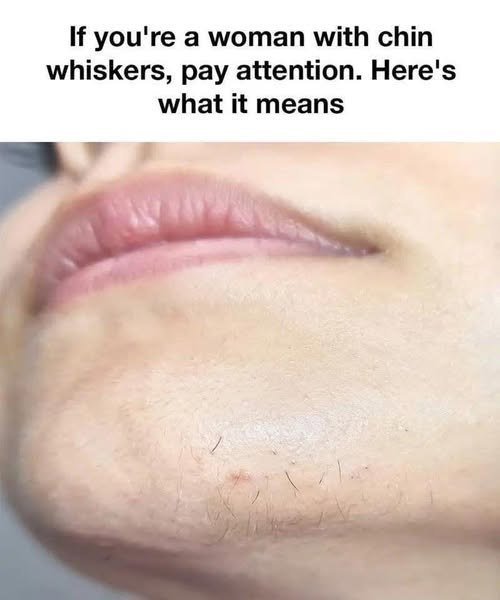
Chin whiskers — those coarse, often dark hairs that grow on the chin — are a very common concern, especially for women. While they can be a source of frustration, they are usually a sign of a normal hormonal balance shift, not necessarily a serious health problem.
Here’s a breakdown of what they mean, why they appear, and how to manage them.
Primary Cause: Hormones
Chin hairs are typically androgenic (influenced by male hormones like testosterone). Everyone produces some androgens, but changes in their levels or in your hair follicles’ sensitivity to them can cause these coarse, terminal hairs to grow in areas typically associated with male patterns.
-
Normal Aging: As estrogen levels drop during perimenopause and menopause, the relative influence of androgens increases. This is why many women first notice chin hairs in their 40s and 50s.
-
Polycystic Ovary Syndrome (PCOS): This common hormonal disorder is characterized by higher androgen levels, often leading to hirsutism (excessive hair growth on the face, chin, chest, and back), along with other symptoms like irregular periods and acne.
-
Genetics: Your family history plays a huge role. If your mother or grandmother had chin hairs, you’re more likely to develop them.
-
Certain Medications: Some drugs (like certain steroids or minoxidil) can cause hair growth as a side effect.
When to See a Doctor
Consult a healthcare provider or dermatologist if:
-
The hair growth is sudden and rapid.
-
It’s accompanied by other signs of hormonal imbalance (e.g., deepening voice, acne, irregular periods, unexplained weight gain, or hair loss on the head).
-
You suspect it might be related to PCOS or other endocrine conditions.
They can run tests (like blood work for hormone levels) and provide a diagnosis.
Safe Removal & Management Options
Important: Never tweeze, wax, or thread hairs that appear suddenly, are very coarse, or grow rapidly without a doctor’s evaluation, as this can stimulate growth if there’s an underlying hormonal condition.
Once medically cleared, here are the common methods:
-
Tweezing: Good for a few stray hairs. Can be painful and may cause ingrown hairs.
-
Waxing/Threading: Effective for removing multiple hairs at once. Results last 3-6 weeks.
-
Depilatory Creams: Chemical creams that dissolve the hair at the skin’s surface. Always do a patch test first to check for skin sensitivity.
-
Electrolysis: The only method considered permanent. A tiny probe destroys individual hair follicles with electric current. Requires multiple sessions. Performed by a licensed professional.
-
Laser Hair Removal: Targets the pigment in the hair follicle to reduce growth. Works best on dark hair and light skin. Requires multiple sessions and offers long-term reduction. Must be done by a professional.
-
Prescription Creams: Eflornithine (Vaniqa) is a topical prescription cream that slows hair growth. It’s often used alongside other removal methods.
What NOT To Do
-
Shave: While not harmful, shaving can lead to fast regrowth that feels blunt and stubbly, often making the hair appear thicker (though it isn’t).
-
Use Unclean Tools: Always sterilize tweezers to prevent infection.
-
Ignore Accompanying Symptoms: If you have other symptoms, prioritize a medical check-up before focusing on cosmetic removal.
Bottom Line: Chin whiskers are a widespread, often genetically or hormonally driven occurrence. While primarily a cosmetic concern, they can sometimes signal a hormonal imbalance like PCOS, especially if they appear alongside other symptoms. A combination of professional medical advice and chosen hair removal methods is the best path forward.