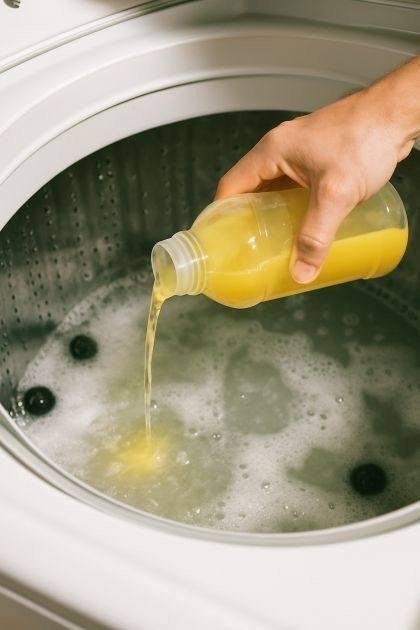
White vinegar is a laundry room powerhouse. It’s a natural, affordable, and highly effective alternative to commercial fabric softeners and harsh bleach for white laundry.
Here’s a breakdown of exactly how it works and the right way to use it to whiten whites and soften towels.
🧪 How Vinegar Works Its Magic
-
For Whiter Whites: It’s a Natural Brightener and Deodorizer.
-
Removes Soap & Mineral Buildup: Detergent residue, body oils, and hard water minerals can leave whites looking dull and gray. Vinegar’s acetic acid dissolves this alkaline buildup, stripping it away to reveal the original white fabric.
-
Kills Odor-Causing Bacteria: Vinegar is a mild disinfectant. It neutralizes mildew and sweat smells at the source, leaving clothes smelling fresh, not like vinegar (the odor completely rinses away).
-
Breaks Down Stains: The acid can help break down and lift certain stains like underarm yellowing, fruit stains, and coffee before they set.
-
-
For Softer Towels: It’s a Natural Fabric Softener.
-
Dissolves Residue: The #1 reason towels get stiff and scratchy is because fabric softener and detergent coat the fibers over time. Vinegar strips this waxy, sticky residue away, restoring the towel’s natural absorbency and fluffy texture.
-
Balances pH: Vinegar helps neutralize the alkaline pH left by detergent, which can make fibers feel harsher.
-
✅ The Right Way to Use Vinegar in Laundry
Important First Step: Always do a spot test on an inconspicuous area (like an inside seam) to ensure colorfastness, especially on dark or bright colors.
For Whiter Whites & Bright Colors:
-
Add to the Wash Cycle: Pour ½ to 1 cup of distilled white vinegar into the detergent dispenser or directly into the drum at the start of the wash cycle. You can use it in addition to your regular detergent.
-
For Stains or Yellowing: Soak the garment overnight in a solution of 1 part vinegar to 4 parts cold water before washing as usual.
-
For Hard Water: Adding vinegar to every load helps prevent the mineral deposits that dull fabrics.
For Softer, Fluffier Towels:
-
Use as a Rinse Agent: Add ½ cup of white vinegar to the fabric softener dispenser. This ensures it’s released during the final rinse cycle, where it can effectively neutralize detergent residue without interfering with cleaning.
-
Revive Old Towels: Run stiff towels through a hot wash cycle with no detergent, using 1-2 cups of vinegar. Then run a second cycle with just ½ cup of baking soda to deep clean and deodorize.
⚠️ Important Do’s and Don’ts
| Do ✅ | Don’t ❌ |
|---|---|
| Use distilled white vinegar. It’s clear and won’t stain. | Mix vinegar with chlorine bleach. This creates toxic chlorine gas. Extremely dangerous. |
| Add it to the drum or correct dispenser. | Pour it directly on clothes without diluting, as concentrated acid can weaken fibers over time. |
| Use it on cotton, towels, and sheets. It’s ideal for natural fibers. | Use it on silk, wool, leather, or acetate. The acid can damage delicate fabrics. |
| Clean your washing machine monthly with a vinegar cycle to remove soap scum. | Assume it will remove all stains. It’s a great booster but not a substitute for stain remover on tough stains. |
🧠 Why It’s Better Than Commercial Softener for Towels
Fabric softener works by coating fibers with a waxy substance. On towels, this coating:
-
Reduces Absorbency: Makes them less effective at drying you.
-
Traps Odors: The coating can hold onto mildew and bacteria.
-
Causes Buildup: Leads to the stiff, scratchy feeling over time.
Vinegar solves all these problems by removing the coating, not adding a new one.
Final Tip: For the whitest whites, pair vinegar with drying your laundry in direct sunlight, which is a natural bleaching agent.
It’s a simple, effective, and eco-friendly laundry hack that really works!