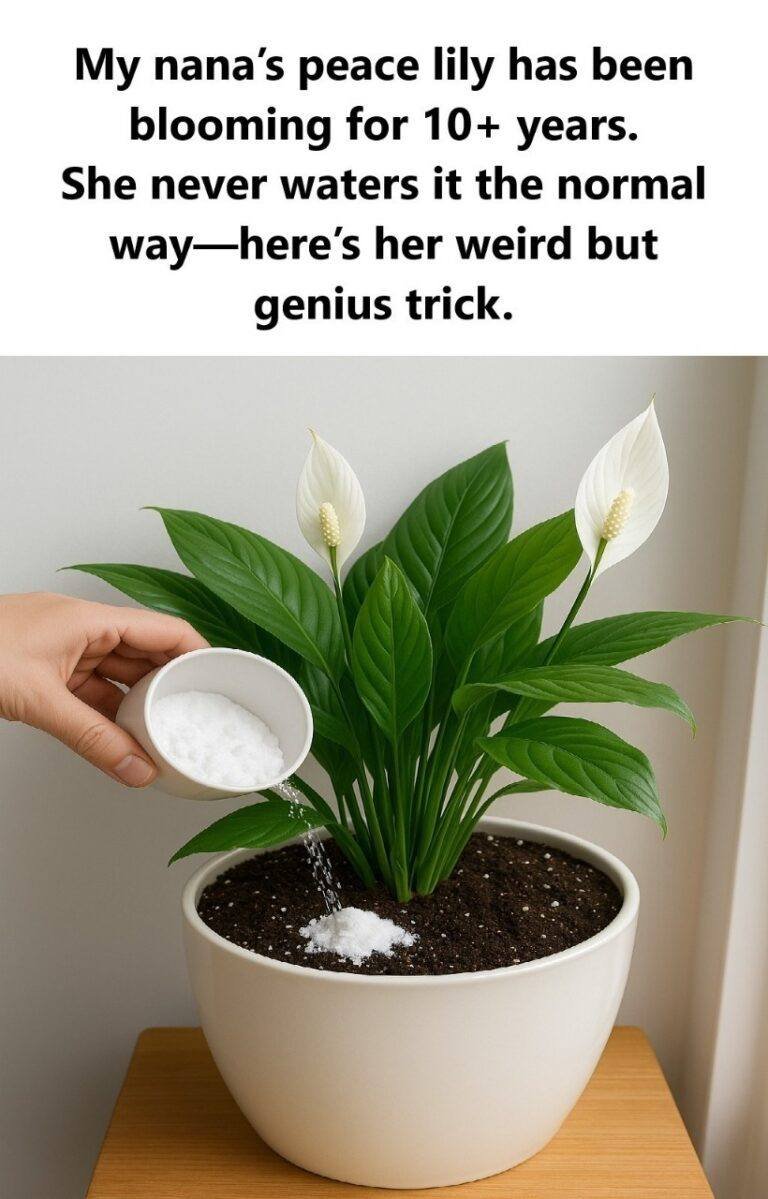
The “secret” it’s hinting at is likely using ice cubes to water your peace lily—a popular but controversial trick. Let’s decode the real “lasting beauty” secret, which isn’t about a single magic ingredient, but about perfectly mimicking the plant’s natural tropical habitat.
While ice cubes can be a measured way to avoid overwatering, they can also shock the roots with cold and don’t provide thorough saturation. The true “forget water” secret is about what you add to the water and how you deliver it.
💧 The Real “Secret Elixir” for Lasting Beauty
For vibrant leaves and more flowers, your peace lily doesn’t need plain water all the time. Once a month, use this instead:
Weak, Balanced, Liquid Fertilizer
-
The “Secret”: A half-strength dose of a balanced liquid houseplant fertilizer (e.g., 10-10-10 or 20-20-20) provides essential nutrients that water alone cannot.
-
How-To: From spring to fall, fertilize once a month. Dilute the fertilizer to half the strength recommended on the bottle. Over-fertilizing (which causes brown leaf tips) is a bigger risk than under-fertilizing for peace lilies.
-
Alternative “Kitchen” Secret: You can occasionally use aquarium water (dechlorinated and nutrient-rich) or very diluted compost tea.
☕ The “How-To” Secret: Perfect Watering Technique
What to Use Instead of Just Water (Sometimes):
-
Room Temperature, Filtered, or Rain Water: Peace lilies are sensitive to chlorine, fluoride, and other chemicals in tap water, which cause brown tips. Letting tap water sit out for 24 hours allows chlorine to evaporate.
-
The “Soak and Dry” Method: This is the true secret for health. Water deeply until it runs out the drainage holes, then let the top 1-2 inches of soil dry out completely before watering again. The plant will dramatically wilt when thirsty, then perk up within hours of watering.
🍃 The Overlooked “Beauty” Secrets (Beyond Water)
-
Light Secret: Bright, indirect light is key for flowering. A north or east-facing window is ideal. Too little light = no flowers. Direct sun = scorched leaves.
-
Humidity Secret: This is non-negotiable. Brown leaf tips are often from dry air. Group plants together, use a pebble tray, or run a humidifier.
-
Potting Secret: They prefer to be slightly root-bound, which encourages blooming. Repot only when roots circle the pot, and always use a well-draining potting mix.
🚫 What NOT to Use Instead of Water
-
Milk, Soda, or Other Kitchen Liquids: These can harm the roots, attract pests, and cause rot.
-
Ice Cubes as a Regular Practice: The cold can damage tropical roots over time.
-
Water Straight from the Tap if it’s Hard/Heavily Treated: Always let it sit to reach room temperature and off-gas.
📊 Quick Care Cheat Sheet
| What to “Use Instead” | Why It Works | When to Apply |
|---|---|---|
| Half-Strength Liquid Fertilizer | Provides nutrients for growth & blooms. | Once a month in Spring/Summer. |
| Filtered/Rain/Stagnant Tap Water | Prevents chemical burn on leaf tips. | For every watering. |
| The “Soak and Dry” Method | Promotes strong roots & prevents rot. | When top 1-2″ of soil is dry. |
The Bottom Line:
The headline’s “secret” is best interpreted as switching from a routine of plain tap water to a regimen of the right kind of moisture (room temp, filtered) supplemented with occasional, dilute nutrients. Forget only water—think about water quality, technique, and light. A happy peace lily will reward you with glossy leaves and elegant white blooms.
If your peace lily has specific issues (yellow leaves, brown tips, no flowers), I can provide more targeted advice.
My peace Lilly looks very healthy but so far after 6 months I haven’t seen any flowers I water with half strength liquid fertiliser every three weeks and just water the rest of the time when needed