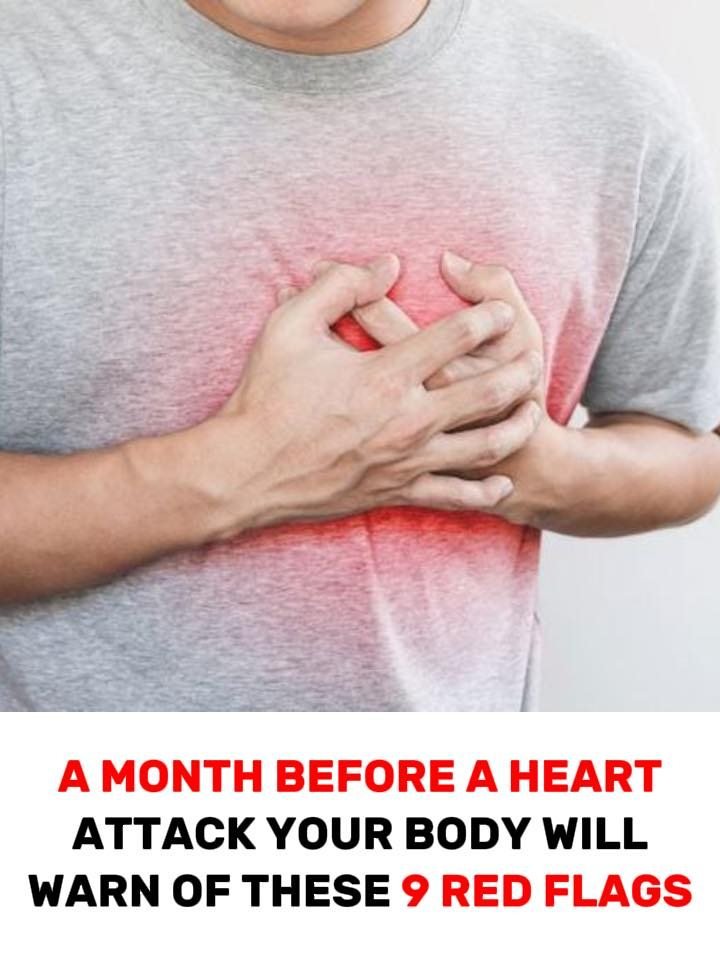
This topic is extremely important, and it’s crucial to address it with accuracy and care. The idea that your body gives specific warnings exactly one month before a heart attack is a myth that circulates online. Heart attacks (myocardial infarctions) often occur suddenly, but they are usually the result of underlying heart disease that has developed over years.
However, it is absolutely true that many people—especially women—experience warning signs hours, days, or even weeks before a cardiac event. These are often subtler than the “Hollywood heart attack” and are easily mistaken for other less serious conditions.
Here are 6 crucial symptoms that can be early warnings of heart trouble, signaling unstable angina or a looming heart attack. If you notice these, especially if they are new, worsening, or unexplained, seek medical evaluation immediately.
Key Pre-Heart Attack Symptoms (The “Alerts”)
-
Unusual or Extreme Fatigue: A sudden, profound fatigue that isn’t relieved by rest and isn’t related to obvious exertion. Simple activities like making the bed or walking to the mailbox feel overwhelmingly exhausting. This is a particularly common early sign in women.
-
Chest Discomfort (Angina): This is the most critical symptom. It may not be sharp pain, but rather a feeling of:
-
Pressure, tightness, squeezing, or fullness.
-
Pain that comes and goes (often brought on by physical or emotional stress and relieved by rest).
-
The sensation may radiate to the jaw, neck, back, shoulder, or arm (often the left arm, but not always).
-
-
Shortness of Breath (Dyspnea): Feeling breathless or unable to catch your breath during routine activities or even at rest. It may occur before or without any noticeable chest discomfort. It often feels like you can’t get enough air or are unusually winded.
-
Indigestion, Nausea, or Abdominal Pain: Unexplained stomach pain, queasiness, or feeling like you have severe indigestion that doesn’t resolve with antacids. This is another symptom more frequently reported by women.
-
Sleep Disturbances & Anxiety: A sense of impending doom, unexplained anxiety, or waking up in the middle of the night with shortness of breath. Some people report unusual insomnia in the weeks leading up to an event.
-
Other Vague Symptoms: These can include:
-
Cold sweats or clammy skin without cause.
-
Lightheadedness or dizziness.
-
General malaise—a feeling that “something is just not right.”
-
What You Should DO: The “Don’t Wait” Rule
-
Do NOT Ignore: Do not chalk these symptoms up to “just stress,” “indigestion,” or “getting older.”
-
Do NOT Delay: Time is muscle. Every minute a blocked artery remains closed, more heart muscle dies.
-
Call Emergency Services Immediately (e.g., 911, 999, 112): If you or someone else experiences symptoms that could be a heart attack, especially chest discomfort lasting more than a few minutes or that goes away and comes back.
-
Do not drive yourself to the hospital. Paramedics can begin life-saving treatment on the way.
-
-
See Your Doctor Promptly: For new, recurring, or changing symptoms, schedule an appointment to discuss your heart health and risk factors (high blood pressure, cholesterol, diabetes, smoking, family history).
Conclusion
While the “one-month warning” is not a medically accurate timeline, your body does send signals when your heart is in trouble. Listen to your body. The most dangerous thing you can do is ignore these symptoms because they don’t match a dramatic, movie-style heart attack. When in doubt, get it checked out. It could save your life.