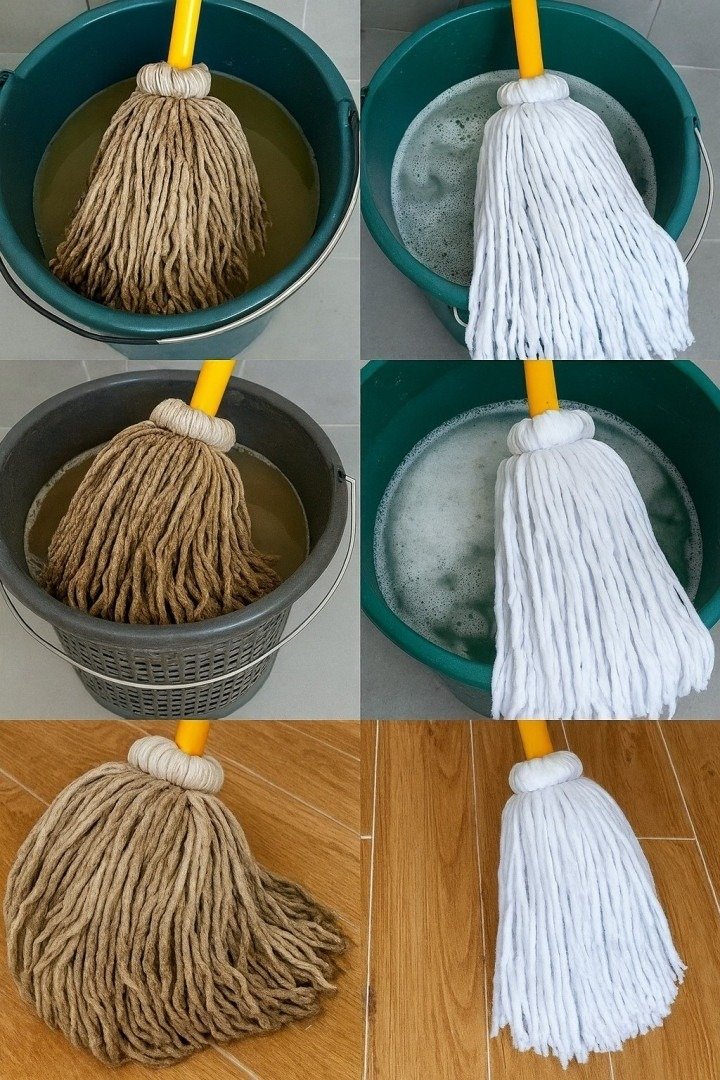
Throwing out a mop is wasteful and often unnecessary. Even the grimiest mop can usually be rescued with a deep clean and disinfecting routine.
Here’s a step-by-step guide to revive a very dirty, smelly mop, whether it’s a microfiber, cotton, or sponge head.
First: Safety & Prep
-
Wear gloves. You’ll be handling dirty water and cleaners.
-
Work outside or in a utility sink/bathtub you can disinfect afterward.
-
Check the mop head’s care label. If it says “do not bleach,” use oxygen-based bleach (like OxiClean) or vinegar instead of chlorine bleach.
The Deep Clean Method (For All Mop Types)
Step 1: Pre-Soak & Pre-Treat
This loosens the deeply embedded grime.
-
Remove the mop head from the handle if possible.
-
Fill a bucket or basin with the hottest water safe for the fabric.
-
Add a powerful, grease-cutting cleaner. Choose one:
-
Laundry Detergent + Dish Soap: ¼ cup of each. Dish soap is excellent at breaking down oils.
-
Oxygen-Based Bleach (OxiClean): ½ cup. Great for stains and odor removal.
-
Baking Soda & Vinegar: 1 cup baking soda, then add 1 cup white vinegar (it will fizz). Let it sit.
-
-
Submerge the mop head and soak for at least 1 hour, or overnight for severe cases.
Step 2: Agitate & Scrub
-
After soaking, don the gloves and agitate the mop head vigorously in the water. Knead it like dough.
-
For stubborn, caked-on dirt, lay it on a concrete surface or old cutting board and scrub with a stiff-bristled brush (a nail brush or dish brush works).
-
Rinse thoroughly with a strong stream of hose water or in the sink until the water runs completely clear. This is crucial—any leftover soap will attract more dirt later.
Step 3: Disinfect & Kill Odors
Cleaning removes dirt; disinfecting kills germs and mold causing the smell.
-
For Bleach-Safe Mops (most white cotton): Mix a fresh solution of 1 part household chlorine bleach to 10 parts cool water in a bucket. Soak the rinsed mop head for 5-10 minutes. No longer, as bleach can weaken fibers.
-
For Non-Bleach Mops (microfiber, colored): Use one of these:
-
White Vinegar Soak: Soak in a solution of 1 part white vinegar to 4 parts hot water for 30 minutes. Vinegar is a natural deodorizer and disinfectant.
-
Hydrogen Peroxide (3%): Soak for 15-30 minutes. Excellent for killing mold and mildew.
-
Step 4: The Final Wash & Dry
-
Machine Wash (if applicable): Toss the mop head into the washing machine (by itself or with other cleaning rags) on the hottest setting with detergent and an extra rinse cycle. Add vinegar to the fabric softener dispenser for extra freshness.
-
Hand Wash: If not machine-washable, give it one more thorough rinse in clean, hot water with a little detergent, then rinse until clear.
-
Dry Completely: This is the most important step to prevent future mildew.
-
Best Method: Hang it outside in direct sunlight. The sun is a natural disinfectant and bleach.
-
Dryer: Tumble dry on low heat if the label allows.
-
Air Dry: Hang in a well-ventilated area, ensuring it’s fully opened up. A damp, bunched-up mop will develop that sour smell again.
-
Mop-Type Specific Tips
-
Microfiber Mops: Never use fabric softener or high heat, as it ruins the fibers’ cleaning ability. Use vinegar in the rinse instead.
-
Sponge Mops: Squeeze the soaking and disinfecting solutions through the sponge repeatedly. Ensure you can wring it completely dry.
-
Cotton/String Mops: These are the most durable for this process. The bleach soak is very effective for whitening them.
How to Keep Your Mop Cleaner Longer (Prevention)
-
Rinse After Every Use: Always rinse the mop head in clean water and wring it out thoroughly after mopping.
-
Disinfect Regularly: Once a week, give it a quick 10-minute soak in a hot vinegar solution.
-
Dry Properly: Never store a mop head sitting in a bucket or bunched up. Use a mop hanger or hang it separately.
-
Two-Bucket Method: When mopping, use one bucket for cleaning solution and one for rinse water. Dip, mop, then rinse in the clean water before re-dipping in the cleaner. This prevents immediately re-soiling your mop.
When It’s Finally Time to Replace
No amount of cleaning can fix a mop that is:
-
Physically falling apart (strings disintegrating, sponge crumbling).
-
Permanently stiff or matted, even when clean.
-
Still harboring a foul odor after multiple deep cleans (the core may be moldy).
By following this routine, you can extend the life of your mop by months, save money, and ensure you’re actually cleaning your floors, not just spreading old dirt and germs.