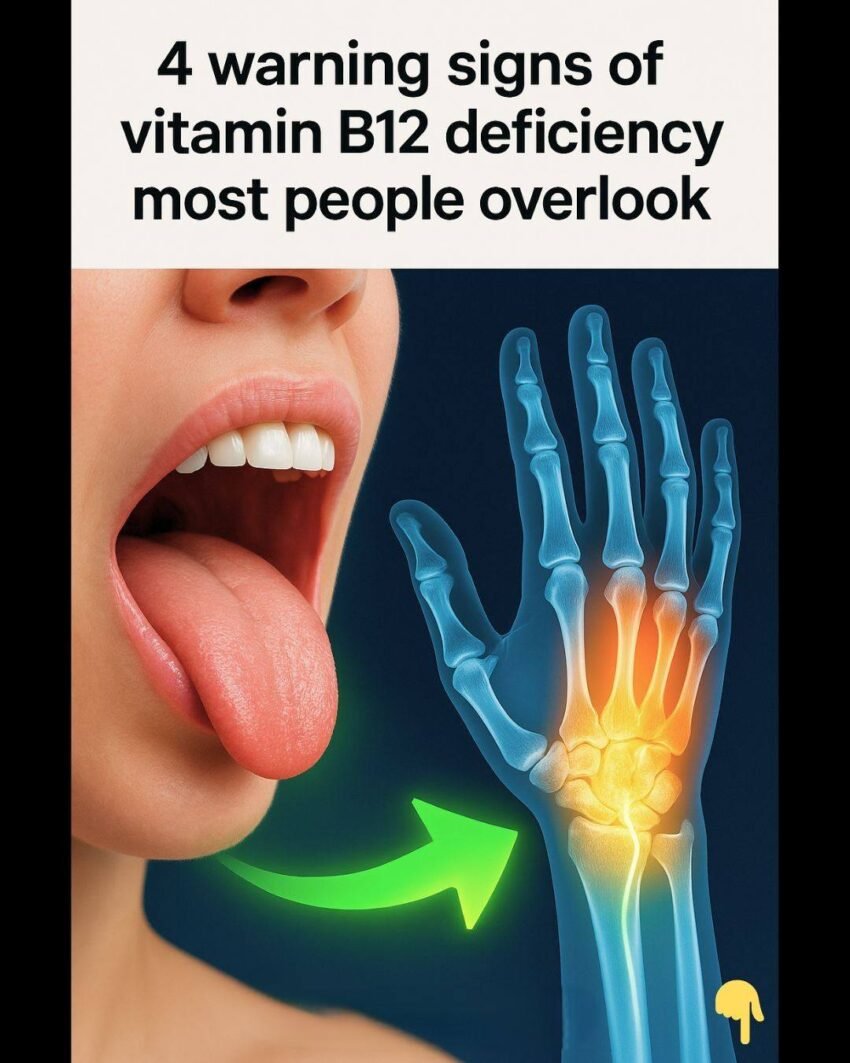
Vitamin B12 deficiency is serious and often insidious, as symptoms can appear gradually and mimic other conditions. Here are 4 alarming symptoms you should never ignore, along with crucial context.
1. Neurological & Sensory Disturbances: “Pins and Needles” and Numbness
-
What it feels like: A persistent tingling, “pins and needles” sensation (paresthesia), or numbness, often starting in the hands and feet. This occurs because B12 is essential for maintaining the myelin sheath—the protective coating around nerves. Without it, nerves become damaged, leading to these abnormal sensations.
-
Why it’s alarming: This nerve damage can become permanent if the deficiency is not corrected in time. It can progress to difficulty walking, loss of proprioception (knowing where your limbs are in space), and severe nerve pain.
2. Brain Fog, Memory Loss, and Mental Health Changes
-
What it feels like: Unusual cognitive decline that may be mistaken for early dementia. This includes persistent brain fog, difficulty concentrating, memory lapses, and mental confusion. It can also manifest as mood disturbances like depression, anxiety, irritability, or even psychosis.
-
Why it’s alarming: B12 is vital for producing neurotransmitters and maintaining healthy brain cells. Prolonged deficiency can lead to irreversible cognitive damage. It’s critical to rule out B12 deficiency in cases of cognitive decline, especially in older adults.
3. Extreme Fatigue and Weakness
-
What it feels like: An overwhelming, debilitating fatigue and generalized weakness that isn’t relieved by sleep. You may feel constantly exhausted, out of breath, and dizzy (especially upon standing).
-
Why it’s alarming: This is caused by megaloblastic anemia. B12 is needed to make healthy red blood cells that carry oxygen. Without it, your body produces large, immature, and inefficient red blood cells, leading to reduced oxygen delivery to every tissue in your body, including the brain and muscles.
4. Glossitis and Mouth Ulcers
-
What it looks/feels like: A swollen, inflamed, beefy-red tongue (glossitis) that may be painful. You might also experience recurring mouth ulcers or a burning sensation in the mouth.
-
Why it’s alarming: These are often early, visible signs of a deficiency affecting rapidly dividing cells (like those lining the mouth). Ignoring them allows the underlying deficiency to continue damaging nerves and blood cells.
Who is Most at Risk?
These groups should be especially vigilant:
-
Older adults (reduced stomach acid impairs B12 absorption).
-
People on long-term antacid medication (PPIs, H2 blockers).
-
Vegetarians and especially vegans (B12 is primarily in animal foods).
-
Individuals with gastrointestinal disorders like Crohn’s, celiac, or those who have had weight-loss surgery.
-
People with pernicious anemia (an autoimmune condition that prevents B12 absorption).
What to Do If You Experience These Symptoms
-
Do NOT self-diagnose or simply start high-dose supplements. While B12 is generally safe, masking symptoms without a proper diagnosis can allow other conditions to go untreated.
-
See a doctor immediately. Report all your symptoms in detail.
-
Request specific blood tests: A Complete Blood Count (CBC) and serum B12 level are standard. For early or subtle deficiency, ask about methylmalonic acid (MMA) and homocysteine tests, which are more sensitive.
-
Follow medical guidance: Treatment typically involves high-dose B12 supplementation (oral, sublingual, or injections for severe deficiency or absorption issues) to correct the deficit and then a maintenance plan.
Bottom Line: Vitamin B12 deficiency is a progressive condition that can cause permanent neurological damage if left untreated. These symptoms are your body’s urgent alarm system. Listen to it and seek professional medical evaluation promptly. Early diagnosis and treatment are highly effective and can completely reverse most symptoms.