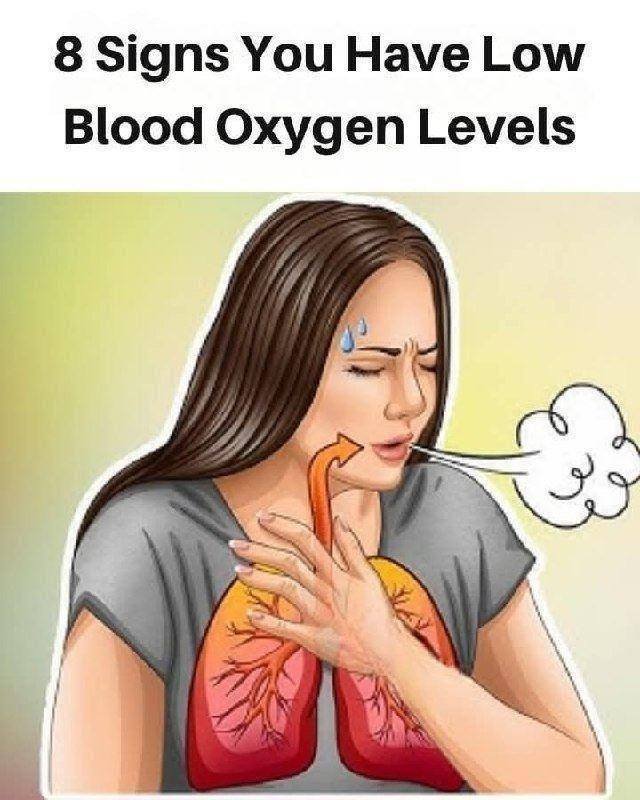
Low blood oxygen levels, known as hypoxemia, can be a serious medical condition requiring prompt attention. It’s crucial to recognize the early warning signs, as prolonged low oxygen can damage vital organs.
Here are 8 warning signs of low blood oxygen levels, ranging from subtle to severe.
1. Shortness of Breath (Dyspnea)
This is the most common and often earliest symptom. It’s a feeling of not being able to get enough air, which may occur even while at rest or during minimal activity that wouldn’t normally cause it.
2. Rapid or Shallow Breathing (Tachypnea)
Your body automatically tries to compensate for low oxygen by increasing your breathing rate. You may notice you’re breathing faster or taking unusually quick, shallow breaths.
3. Rapid Heart Rate (Tachycardia)
The heart works harder to pump what oxygen is available to the body’s tissues. A sudden, unexplained increase in heart rate, especially at rest, can be a sign.
4. Cyanosis (Bluish Discoloration)
This is a more serious, late sign. It appears as a bluish or grayish tint to the skin, lips, gums, nail beds, or around the eyes. It indicates significantly low oxygen saturation and requires immediate medical attention.
5. Confusion, Restlessness, or Cognitive Changes
The brain is extremely sensitive to oxygen levels. Early signs can include:
-
Feeling disoriented or confused.
-
Sudden restlessness, anxiety, or a sense of impending doom.
-
Memory problems or difficulty concentrating.
6. Extreme Fatigue and Weakness
When cells don’t get enough oxygen to produce energy, profound and unexplained tiredness sets in. You may feel too weak to perform simple tasks.
7. Dizziness, Lightheadedness, or Headache
Low oxygen can affect circulation and brain function, leading to feelings of vertigo, faintness, or a persistent, pounding headache, especially upon waking.
8. Chest Pain or Palpitations
The straining heart and lungs may cause discomfort, pressure, or pain in the chest. You might also feel your heart pounding, fluttering, or skipping beats.
What to Do & When to Seek Immediate Help
If you or someone you’re with experiences any of the following SEVERE symptoms, call emergency services (911 or your local emergency number) immediately:
-
Severe shortness of breath that comes on suddenly.
-
Obvious cyanosis (blue lips, face, or skin).
-
Chest pain accompanied by shortness of breath.
-
Severe confusion or loss of consciousness.
-
A rapid heart rate that doesn’t slow down with rest.
For less severe but persistent symptoms, contact your doctor promptly. They can perform a simple, non-invasive test called pulse oximetry to measure your blood oxygen saturation (SpO₂). A normal reading is typically 95–100%. A reading below 92% is often a cause for concern and requires medical evaluation.
Common Causes of Low Blood Oxygen:
-
Lung conditions (COPD, asthma, pneumonia, pulmonary embolism, COVID-19)
-
Heart conditions (heart failure, congenital heart defects)
-
Anemia
-
Sleep apnea
-
High altitudes
Disclaimer: This information is for educational purposes only and is not a substitute for professional medical advice. If you suspect low blood oxygen, seek medical evaluation immediately.