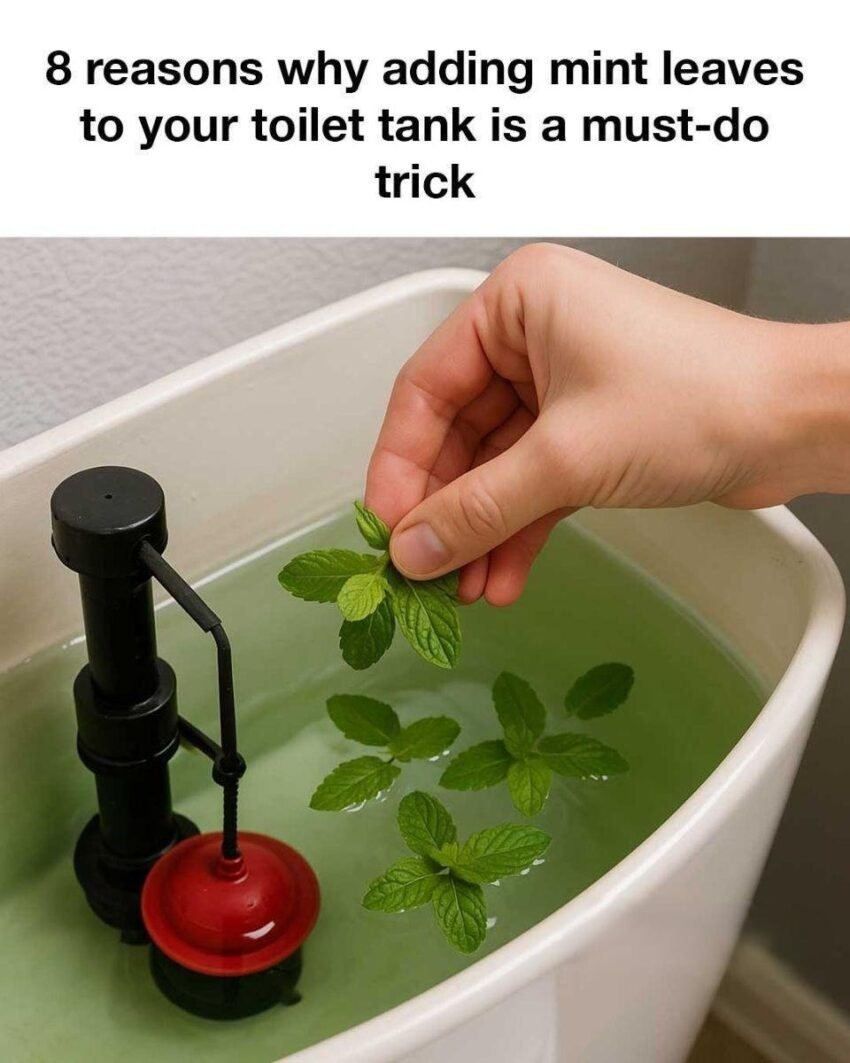
Important Disclaimer: While adding mint leaves or mint oil to a toilet tank is a popular DIY cleaning “hack,” it is not generally recommended by plumbers or cleaning professionals. The claimed benefits are often overstated, and there are significant risks.
Here are the 8 commonly cited reasons people suggest this trick, followed by the reality check for each.
The 8 Claimed Reasons (The “Must-Do” Promises)
-
Natural Fresh Scent: Every flush releases a mild minty aroma into the bathroom, acting as a continuous air freshener.
-
Cleans the Tank: The antibacterial properties of mint are said to help clean and disinfect the tank’s interior.
-
Cleans the Bowl: Mint-infused water flowing into the bowl with each flush is claimed to help keep it cleaner and reduce stains.
-
Prevents Mold & Mildew: Mint’s antimicrobial action is supposed to inhibit mold and slime growth in the moist tank environment.
-
Repels Insects & Spiders: The strong scent of mint is believed to deter pests like spiders, ants, and silverfish from taking up residence in the tank.
-
Removes Mineral Deposits: The citric acid (in some mint varieties) and natural acids are thought to help break down limescale and rust.
-
Saves Money: It’s marketed as a cheap, natural alternative to commercial tank cleaners, tablets, or air fresheners.
-
Eco-Friendly: It’s seen as a non-toxic, biodegradable option compared to chemical cleaners.
The Reality Check & Significant Risks
1. Ineffective Cleaning: The concentration of mint oil or compounds from a few leaves in a 2+ gallon tank of water is far too weak to disinfect, break down limescale, or clean effectively. It cannot replace proper scrubbing with appropriate cleaners.
2. Can Damage Your Plumbing & Toilet:
-
Clogs & Residue: Leaves or plant matter can break down and contribute to sludge in the tank. They can float and clog the flapper valve or small channels in the toilet mechanism.
-
Corrosion: Essential oils (like peppermint oil, which is often suggested instead of leaves) are highly corrosive to rubber gaskets, seals, and flappers inside the tank. This leads to leaks and costly repairs.
-
Interference with Tank Components: Debris can interfere with the proper sealing and operation of the fill valve and flapper.
3. Professional Plumbers Strongly Discourage It: They universally advise against putting anything in the toilet tank besides water. This includes commercial “in-tank” cleaning tablets, which often contain bleaching agents that also degrade parts over time. The repair bill for a damaged flapper or valve will far outweigh any perceived benefit.
4. Safer, More Effective Alternatives Exist:
-
For Freshness: Use a wall plug-in, reed diffuser, or simply keep the bathroom well-ventilated.
-
For Cleaning: Regularly clean the bowl with a dedicated toilet cleaner and a brush. For the tank, you can occasionally (every few months) turn off the water, flush to empty it, and scrub the inside of the tank with a gentle brush and mild soap, then rinse thoroughly before reassembling.
-
For Pest Control: Seal cracks, fix leaks, and use targeted pest control methods. A mint leaf in a tank won’t solve an infestation.
The Bottom Line
While the idea of a self-cleaning, minty-fresh toilet is appealing, this hack is a “must-avoid” trick from a plumbing and practical perspective. The risks of damaging your toilet’s internal components and causing leaks far outweigh the negligible, temporary scent benefit.
Stick to: Proper ventilation for freshness, regular manual cleaning for hygiene, and consult a plumber for maintenance—not viral DIY hacks that can break your toilet.