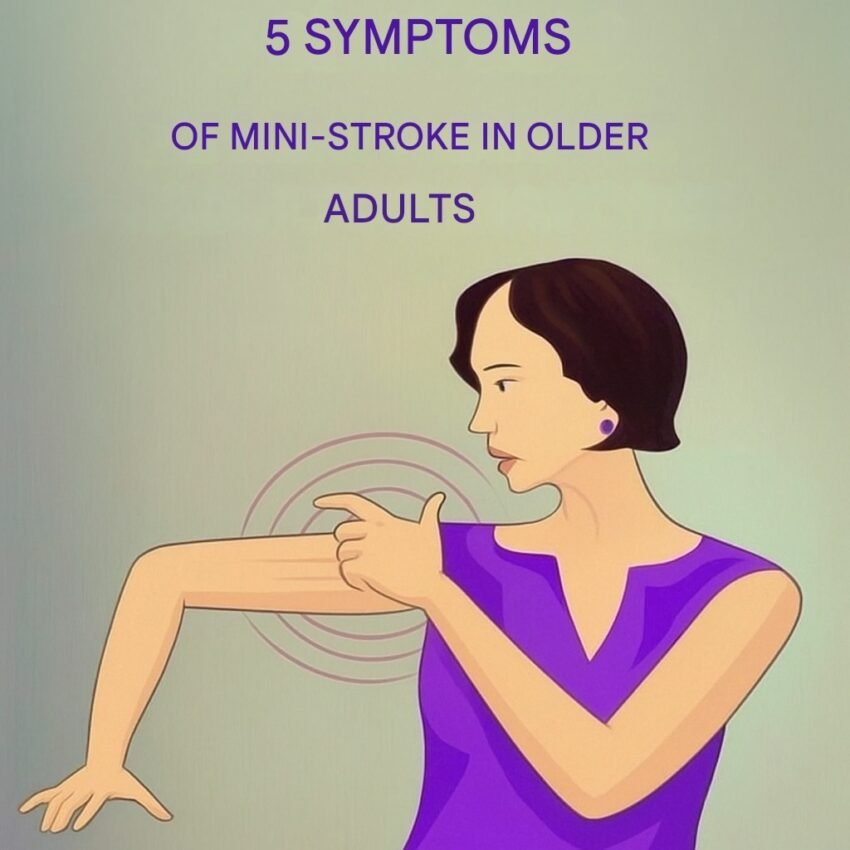
5 Symptoms of a Mini Stroke in Seniors That Shouldn’t Be Ignored
A mini-stroke, medically known as a Transient Ischemic Attack (TIA), is a temporary blockage of blood flow to the brain. Unlike a full stroke, symptoms typically last only a few minutes to hours and leave no permanent damage—but it is a critical warning sign that a major stroke may follow.
Ignoring a TIA can be life-threatening. Up to 1 in 5 people who have a TIA will have a major stroke within 90 days, with the highest risk in the first 48 hours.
Here are 5 key symptoms in seniors that demand immediate medical attention.
1. Sudden Numbness or Weakness
-
What it looks like: Sudden weakness, drooping, or numbness, usually on one side of the body. This often affects the face, arm, or leg.
-
Common signs in seniors:
-
One side of the face droops (ask them to smile—is it uneven?).
-
Arm or leg feels heavy, weak, or difficult to move.
-
Sudden clumsiness or dropping objects.
-
-
Why it’s urgent: This indicates a disruption in the brain area controlling motor function.
2. Sudden Confusion or Trouble Speaking/Understanding
-
What it looks like: Slurred speech, gibberish, or difficulty finding words. The person may seem suddenly confused or unable to understand simple statements.
-
Common signs in seniors:
-
Speech becomes slurred or slow.
-
Using wrong words or nonsensical sentences.
-
Appearing dazed or unable to follow a conversation.
-
-
Why it’s urgent: This points to impaired function in the brain’s language centers.
3. Sudden Vision Problems
-
What it looks like: Vision loss or disturbance in one or both eyes. This is often described as a curtain coming down, blurring, double vision, or blackout.
-
Common signs in seniors:
-
Complaining of sudden blurred or blackened vision.
-
Covering one eye or squinting.
-
Bumping into things on one side.
-
-
Why it’s urgent: Changes in vision can indicate reduced blood flow to the optic nerves or visual processing parts of the brain.
4. Sudden Dizziness, Loss of Balance, or Coordination
-
What it looks like: Unexplained vertigo, stumbling, loss of balance, or trouble walking—without other obvious causes (like standing up too quickly).
-
Common signs in seniors:
-
Staggering or veering to one side.
-
Sudden dizziness or vertigo while sitting or walking.
-
Loss of coordination (e.g., difficulty picking up a glass).
-
-
Why it’s urgent: This may signal disruption in the cerebellum or brainstem, which control balance and coordination.
5. Sudden Severe Headache with No Known Cause
-
What it looks like: A sudden, severe “thunderclap” headache—often described as “the worst headache of my life”—without a history of migraines or injury.
-
Common signs in seniors:
-
Abrupt onset of intense headache.
-
Possible nausea, vomiting, or altered consciousness.
-
Often different from any previous headache pattern.
-
-
Why it’s urgent: While less common in TIA than in hemorrhagic stroke, a sudden severe headache can still signal a vascular event in the brain.
What to Do: Think F.A.S.T.
Use the FAST acronym to act quickly:
-
Face: Ask the person to smile. Does one side droop?
-
Arms: Ask them to raise both arms. Does one drift downward?
-
Speech: Ask them to repeat a simple phrase. Is it slurred or strange?
-
Time: If you see any of these signs, call emergency services immediately (e.g., 911 in the US/Canada, 112 in EU, 999 in UK).
Do not wait to see if symptoms go away. Do not drive yourself or the person to the hospital—ambulance crews can begin lifesaving care en route.
Why Seniors Are at Higher Risk
-
Underlying conditions: High blood pressure, atrial fibrillation, diabetes, high cholesterol.
-
Previous history: Of stroke, TIA, or cardiovascular disease.
-
Age-related vascular changes: Arteries become less flexible.
After a TIA: Prevention is Critical
If a senior experiences a TIA, urgent evaluation is needed to prevent a major stroke. This typically includes:
-
Imaging scans (CT, MRI)
-
Blood tests and heart monitoring
-
Medication (antiplatelets like aspirin, anticoagulants if needed)
-
Lifestyle & risk factor management (controlling blood pressure, cholesterol, blood sugar; quitting smoking)
Bottom Line
A mini-stroke is a medical emergency, not just a “scare.” Recognizing these 5 symptoms and acting immediately can save a life and prevent long-term disability. When in doubt, get it checked out.
If you or a senior you know experiences any of these symptoms—even if they fade—seek emergency care without delay.
Thanks for tips